


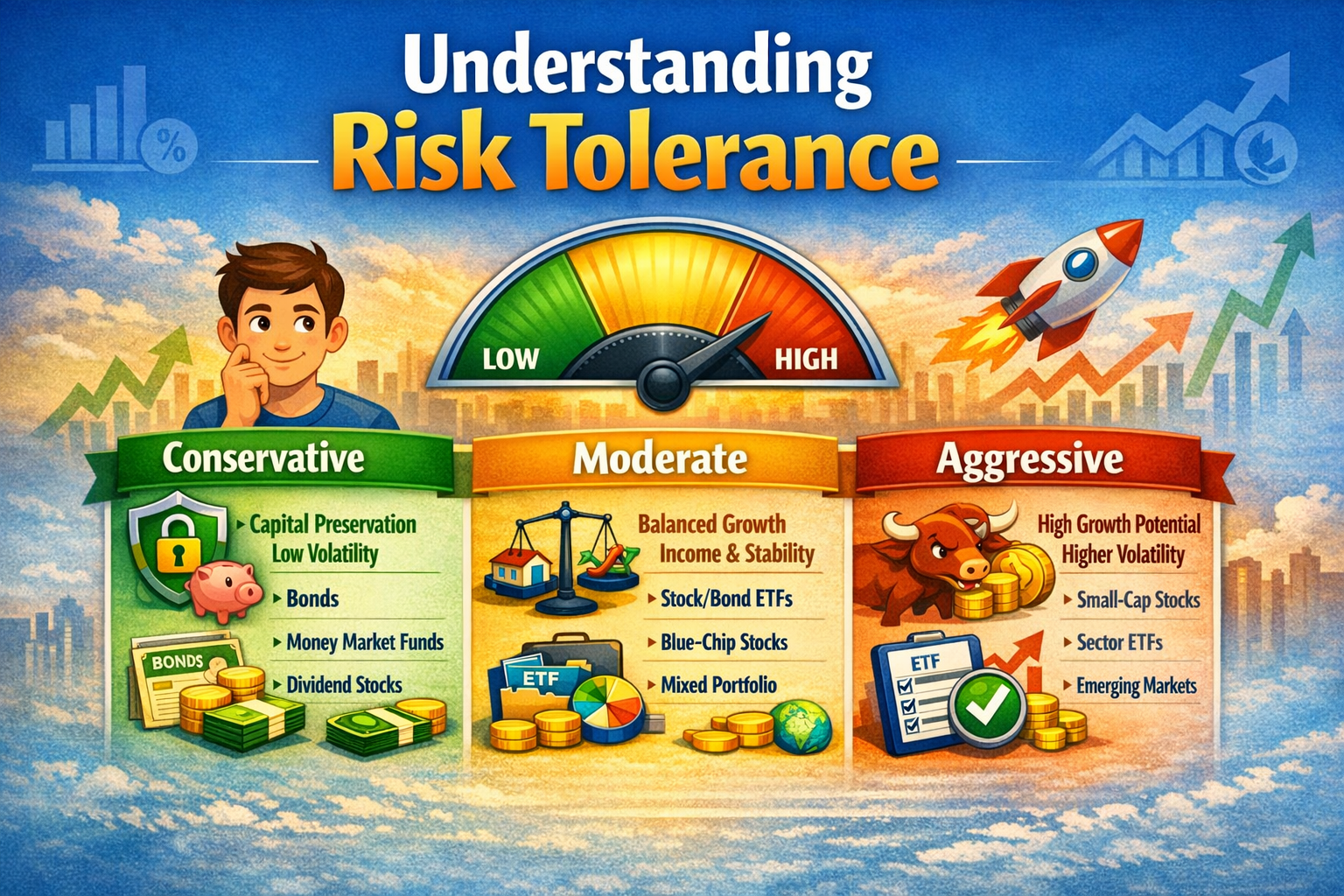
Investing in the financial markets is both exciting and daunting, especially for retail investors who may be starting with limited capital. One crucial concept that can significantly impact your investment journey is risk tolerance. By understanding your risk tolerance, you can make informed decisions that align with your comfort level and financial goals, potentially enhancing your investment experience and outcomes.
What is Risk Tolerance?
Risk tolerance refers to an investor’s ability and willingness to withstand volatility and potential losses in their investment portfolio. It reflects both emotional comfort and financial capacity to endure fluctuations in asset values without panic selling or deviating from one’s plan.
For retail investors with smaller capital, understanding risk tolerance is particularly crucial because the impact of losses or gains can feel more significant relative to their initial investment.
Why Risk Tolerance is Important in Investing?
Investing involves balancing risk and reward. Higher risks might offer higher returns but increase the possibility of losing your invested money. Conversely, low-risk investments tend to provide steadier but usually smaller returns.
Knowing your risk tolerance helps you:
- Select suitable investments: e.g., stocks, bonds, mutual funds, or ETFs.
- Avoid emotional decision-making: reducing panic selling during downturns.
- Align investments with your financial goals: whether saving for retirement, buying a home, or growing wealth.
- Improve investment satisfaction: feeling confident and comfortable with your portfolio.
According to Vanguard’s 2023 surveys, nearly 65% of retail investors who understood their risk tolerance reported higher satisfaction and fewer impulsive decisions, underscoring its importance.
How to Measure Your Risk Tolerance
Factors That Affect Risk Tolerance
| Factor | Explanation |
|---|---|
| Age | Younger investors typically have higher risk capacity due to longer time horizons. |
| Income and Capital | More disposable income may allow for taking on more risk. |
| Investment Goals | Short-term goals might require conservative risk, while long-term goals can tolerate higher risk. |
| Personality & Psychology | Some people are naturally risk-averse; others thrive on higher risk. |
| Financial Obligations | Debts, dependents, and liabilities may lower your risk tolerance. |
Step-by-Step Guide to Calculating Your Risk Tolerance
1. Assess your financial situation:
- Calculate your net worth, monthly cash flow, and emergency fund coverage.
2. Define your investment goals:
- Time horizon (short/medium/long term)
- Financial targets (retirement, home purchase, education)
3. Take a risk tolerance questionnaire:
- These often ask about your reaction to hypothetical market losses or gains.
4. Analyze your emotional response to risk:
- Reflect on how you might react if your portfolio dropped 10%, 20%, or more.
5. Use a risk tolerance score:
- Institutions often provide scores classifying investors as conservative, moderate, or aggressive.
6. Review and adjust periodically:
- Life changes such as marriage, job change, or market experience may alter your risk tolerance.
Factors Affecting Risk Tolerance
| Factor | Description |
|---|---|
| Age | Younger investors generally have higher risk capacity due to longer time horizons. |
| Income | Higher disposable income allows for taking on more risk. |
| Investment Goals | Short-term goals require conservative risk; long-term goals can tolerate higher risk. |
| Personality | Some individuals are naturally risk-averse, while others are comfortable with volatility. |
| Financial Obligations | Debts, dependents, and liabilities can reduce risk tolerance. |
How Risk Tolerance aligns with Your Investment Strategy
Aligning your portfolio with your risk tolerance can streamline decision-making and improve adherence to your plan.
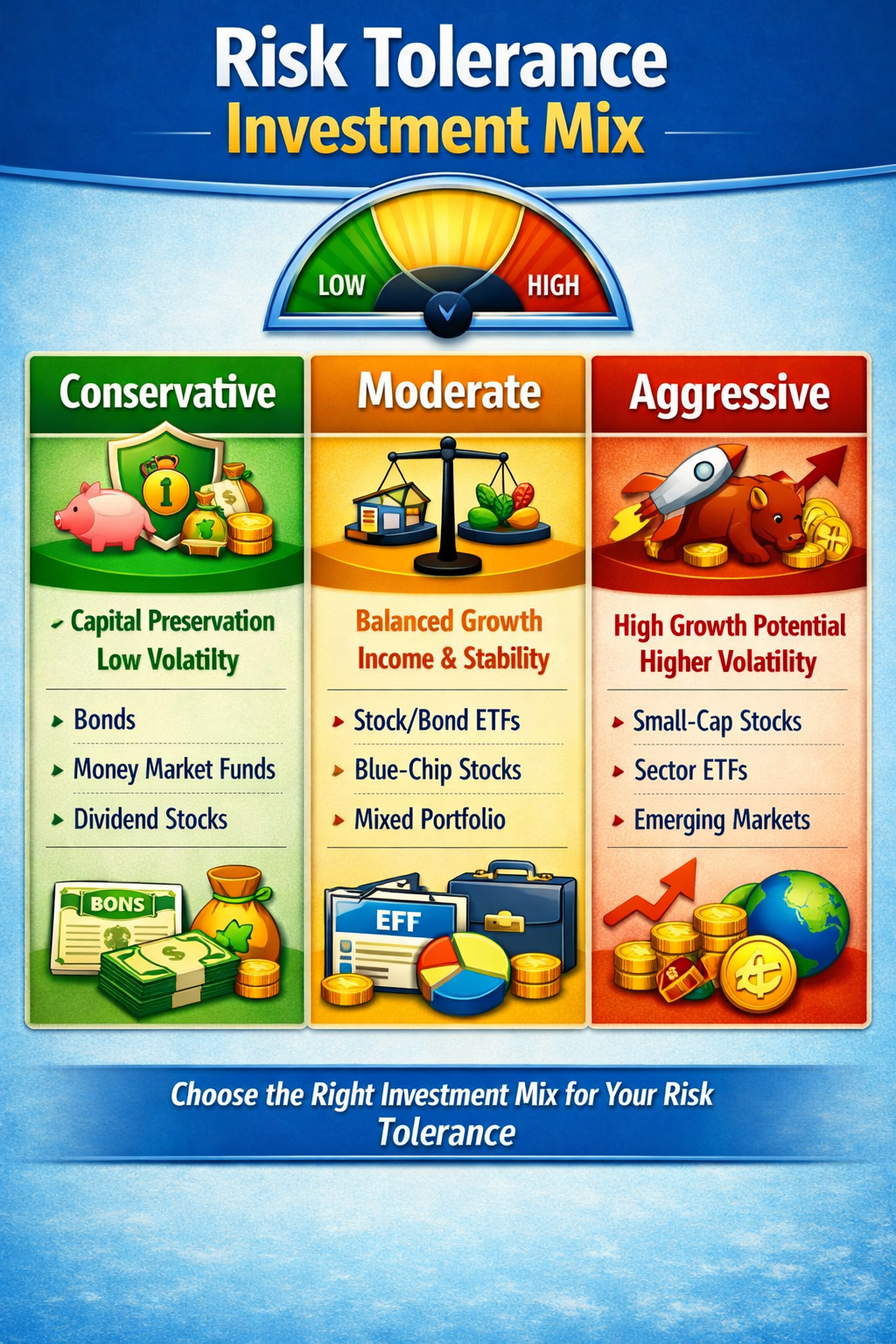
Example: A retail investor with INR 50000 in capital with a moderate risk tolerance might invest 60% in index ETFs and 40% in bond funds to balance growth and risk.
Using Tools to Identify Your Risk Tolerance
Recommended Tools for Retail Investors:
- 🏦 Vanguard Risk Tolerance Questionnaire Helps investors gauge their comfort with market fluctuations and long-term goals.
- 📊 Morningstar Investor Questionnaire Offers a structured approach to identify your investing style and risk appetite.
- 💼 Personal Capital Risk Assessment Tool Analyzes your financial data to recommend a personalized risk level.
- 🤖 Robo-Advisors (e.g., Betterment, Wealthfront) Use algorithms to tailor portfolios automatically based on your risk profile.
💡 Using these tools can help demystify the process, especially for first-time investors seeking clarity and confidence in their investment decisions.
Conclusion
Understanding your risk tolerance is foundational to investing wisely, especially if you’re starting with limited capital and want to protect your hard-earned money. By evaluating your comfort with market ups and downs, your financial position, and your goals, you can build a portfolio that feels right for you.
Remember, your risk tolerance is not set in stone. As your circumstances and experience grow, revisit your risk profile and adjust your investments accordingly.
Need help determining your risk tolerance?
Contact us directly on WhatsApp [+919841741237] for personalized advice and portfolio guidance tailored to your unique situation.
Frequently Asked Questions (FAQs)
Q1: Can my risk tolerance change over time?
A: Yes, factors like age, income, market experience, and life events can influence your risk tolerance over time.
Q2: Is it better to be conservative or aggressive?
A: Neither is 'better' universally. Your choice depends on goals, time horizon, and emotional comfort with risk.
Q3: How often should I reassess my risk tolerance?
A: At least annually or after significant financial or personal life changes.
Q4: Can small capital investors benefit from understanding risk tolerance?
A: Absolutely! Knowing your risk tolerance helps even small investors avoid major losses and build wealth steadily.