




Introduction
Finding your perfect balance in the investment world isn't just about knowing market trends—it's about understanding yourself as an investor! The key lies in distinguishing between two critical concepts: risk capacity and risk appetite. Many Indian investors, especially beginners, often confuse these terms, leading to financial decisions that aren't aligned with their actual situation. With the growing investment opportunities in India's dynamic market, correctly assessing your risk profile has never been more important. This article breaks down the crucial differences and helps you harmonize both elements for better investment outcomes.
What Is Risk Capacity?

Risk capacity forms the foundation of sound investment planning. Unlike risk tolerance, which reflects your emotional comfort with market fluctuations, risk capacity represents your financial ability to withstand losses without jeopardising your financial well-being. Understanding what is risk capacity helps investors make decisions aligned with their actual financial circumstances rather than just their preferences.
Defining Risk Capacity in Financial PlanningRisk capacity is your objective ability to absorb financial losses based on your current financial situation without compromising essential financial goals. It establishes a practical boundary for investment decisions regardless of how much risk you might be willing to accept emotionally.
When assessing what is risk capacity, financial advisors evaluate your actual financial position through quantifiable metrics. This includes calculating your debt-to-income ratio, emergency fund size, and the proportion of your total assets dedicated to various investment categories. Unlike risk tolerance, which may fluctuate with market conditions or personal sentiment, risk capacity remains grounded in financial reality.
Many investors make the critical mistake of selecting investments based solely on their comfort with volatility without first determining if their financial situation can withstand potential losses. At Potoos, we've observed that proper risk capacity assessment often reveals that beginners should take less risk than they initially believe appropriate.
Key Factors Determining Your Risk Capacity
Several concrete factors determine what is risk capacity for individual investors. Each element contributes to your overall ability to withstand financial setbacks:
Age and Investment Timeline: Younger investors typically have higher risk capacity as they have more working years ahead to recover from market downturns. A 30-year-old saving for retirement has significantly more risk capacity than someone five years from retirement.
Income Stability: Consistent, predictable income increases risk capacity. A tenured professor with guaranteed employment has greater risk capacity than a commission-based sales professional whose income fluctuates monthly.
Total Savings Rate: Your ability to continue adding to investments affects risk capacity. Someone saving 25% of their income monthly can withstand more market volatility than someone contributing only 5% of their earnings.
Existing Emergency Reserves: Liquid assets covering 6-12 months of expenses provide a financial buffer that increases risk capacity. Without this safety net, your ability to weather investment losses diminishes significantly.
Debt Obligations: Lower debt-to-income ratios translate to higher risk capacity. Excessive debt payments restrict your financial flexibility during market downturns.
Alternative Income Sources: Diversified income streams enhance risk capacity. Rental properties or side businesses that generate passive income can offset investment losses.
Understanding what is risk capacity requires examining these factors comprehensively rather than in isolation. Your overall financial picture determines how much investment risk you can realistically absorb.
How Risk Capacity Limits Investment Risk
Risk capacity establishes the maximum risk threshold you should consider, regardless of your risk preferences or appetite. This ceiling serves as a critical guardrail for investment decisions, preventing potentially devastating financial consequences.
Many investors mistakenly focus exclusively on maximizing returns without considering their risk capacity. This approach can lead to taking excessive risk that their financial situation cannot sustain. For instance, an investor nearing retirement with minimal additional income sources has limited risk capacity regardless of their willingness to accept market volatility.
What is risk capacity in practical application? Consider this example: A single parent with limited savings, unstable income, and significant debt should prioritize financial stability over aggressive growth investments, even if they personally feel comfortable with market volatility. Their risk capacity dictates a more conservative approach despite their risk tolerance potentially suggesting otherwise.
At Potoos, we help everyday investors understand this critical distinction. While you might feel emotionally prepared to weather significant market downturns, your financial circumstances may not provide the necessary cushion to absorb substantial losses without compromising essential financial goals.
Risk capacity should be reassessed regularly as your financial situation evolves. Major life changes such as marriage, children, homeownership, or career advancement can significantly alter your risk capacity, requiring adjustments to your investment strategy.
Understanding what is risk capacity provides the foundation for building a sustainable investment approach that aligns with your financial reality rather than just your risk preferences. This balance ensures your investments support rather than threaten your long-term financial well-being.
What Is Risk Appetite?

Understanding your risk appetite is foundational to making sound investment decisions. At Potoos, we've observed that many everyday investors jump into markets without truly comprehending their psychological capacity for financial uncertainty. Let's examine what risk appetite really means and how it affects your investment journey.
Defining Your Financial Comfort Zone
Risk appetite represents your psychological willingness to endure financial uncertainty when investing. It's essentially how much potential loss you can stomach without panicking or abandoning your investment strategy. Unlike risk capacity (which measures your financial ability to absorb losses), risk appetite focuses on your emotional readiness to face market fluctuations.
Many investors overestimate their risk appetite during bull markets only to discover their true tolerance when markets decline. This disconnect between perceived and actual risk appetite often leads to poor decision-making. For instance, someone might believe they're comfortable with a 20% portfolio decline, but when actually facing such a loss, they sell investments at market bottoms.
Your risk appetite isn't static—it evolves with life experience, financial education, and changing personal circumstances. At Potoos, we've found that investors with clearer financial goals tend to develop more realistic assessments of their risk appetite over time.
Emotional Responses to Market Volatility
Your emotional reaction to market movements provides crucial insights into your true risk appetite. Pay attention to how you feel when checking investment performance during downturns—does anxiety prompt you to constantly monitor accounts? Do you lose sleep over market corrections?
Research shows that humans experience the pain of financial losses approximately twice as intensely as the pleasure from equivalent gains. This phenomenon, known as loss aversion, significantly influences risk appetite. For example, many beginning investors describe themselves as aggressive risk-takers until experiencing their first 10% market correction.
Market volatility serves as a mirror reflecting your actual risk appetite. Some investors remain calm during 20% market declines, while others become highly distressed with just 5% downturns. Understanding your emotional response pattern helps build investment strategies aligned with your psychological reality rather than theoretical risk tolerance.
Accurately Assessing Your True Risk Tolerance
Traditional risk assessment questionnaires often fail to capture real-world risk appetite because they present hypothetical scenarios divorced from emotional context. To accurately gauge your risk appetite, consider these practical approaches:
- Review past behavior: How did you react during previous market downturns? Past actions reveal more than intentions.
- Start small: Begin with modest investment amounts and gradually increase exposure as you become comfortable with volatility.
- Keep a market journal: Document your thoughts and feelings during both bull and bear markets to identify patterns in your emotional responses.
- Use visualization techniques: Mentally rehearse scenarios where your investments drop by specific percentages (10%, 20%, 30%) and honestly assess your comfort level.
- Conduct periodic reassessments: Your risk appetite may change with age, financial responsibility, and life circumstances.
Many Potoos members discover their actual risk appetite falls between their initial self-assessment and what traditional questionnaires suggest. This realistic self-knowledge forms the foundation for sustainable investment strategies that you can maintain through market cycles.
Understanding what risk appetite really means—beyond theory—empowers you to build investment approaches that align with both your financial goals and emotional realities. When these elements work in harmony, you're more likely to stay committed to your plan through inevitable market fluctuations.
Key Differences Between Risk Capacity and Risk Appetite
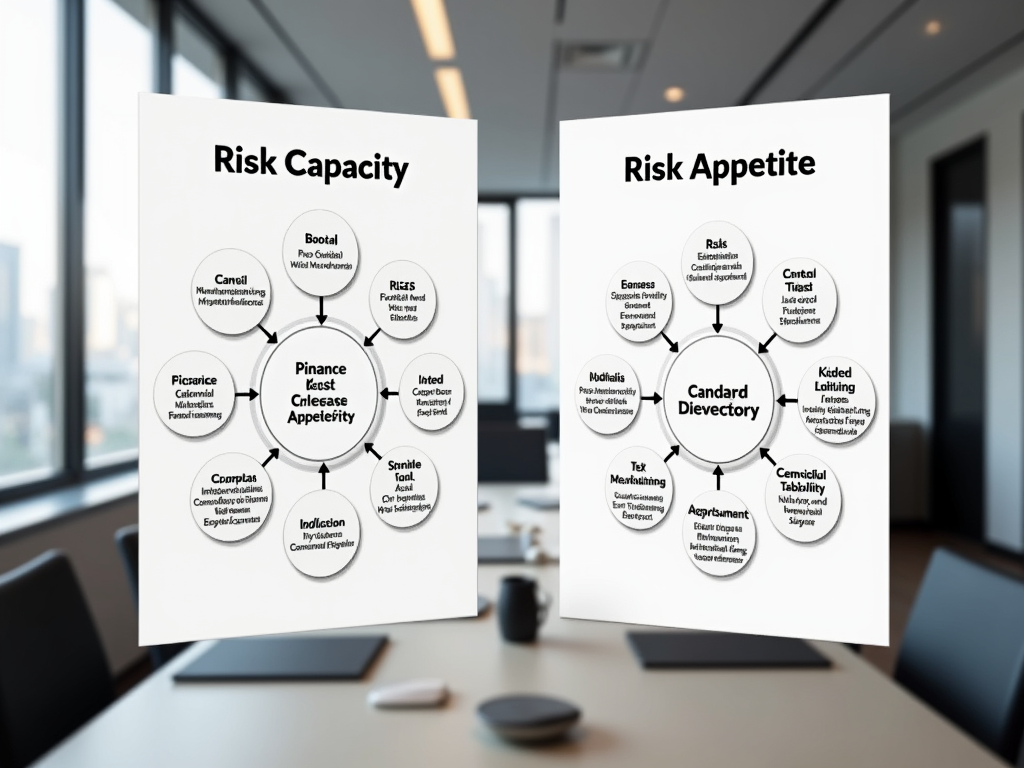
When planning your investment journey, understanding the distinction between risk capacity and risk appetite is crucial. These two concepts form the foundation of sound financial decision-making, yet they're frequently confused or used interchangeably by investors. At Potoos, we've observed how this misunderstanding can derail even the most promising investment strategies.
Objective Capacity vs. Subjective Appetite
Risk capacity represents your objective ability to withstand financial losses without affecting your long-term financial goals. This metric isn't about your feelings—it's about cold, hard numbers.
Your risk capacity depends on several quantifiable factors:
- Time horizon – How many years until you need the invested funds
- Income stability – The reliability of your earnings
- Emergency funds – Liquid assets available for unexpected expenses
- Financial obligations – Debt levels and recurring payments
- Insurance coverage – Protection against unforeseen events
- Net worth – Total assets minus liabilities
For example, a 30-year-old software engineer in Bangalore with minimal debt, six months of emergency savings, and 25+ years until retirement has a significantly higher risk capacity than a 55-year-old with two children in college and retirement just around the corner.
Risk appetite, in contrast, is entirely subjective—it's your emotional willingness to accept uncertainty in your investments. This psychological dimension reflects how comfortable you feel seeing your portfolio value fluctuate.
Your risk appetite might be influenced by:
- Personal experiences with financial markets
- Knowledge of investment principles
- Psychological temperament
- Cultural attitudes toward money and risk
- Recent market events
A perfect example is how many investors' risk appetites dramatically decreased during the 2008 financial crisis or the 2020 market crash, even when their actual risk capacity remained unchanged.
Alignment and Conflict Scenarios
The ideal investment strategy emerges when your risk capacity and risk appetite align. However, this harmony isn't always present, creating potential conflicts that require careful navigation.
Alignment Scenarios:
When capacity and appetite match, investment decisions become clearer. Consider these aligned situations:
- High capacity, high appetite: A young professional with substantial savings and comfort with market volatility might appropriately invest heavily in growth stocks and alternative assets.
- Low capacity, low appetite: A retiree with limited savings who fears market downturns would be well-suited to conservative investments like government bonds and fixed deposits.
Conflict Scenarios:
Misalignment creates challenges that require intervention:
- High capacity, low appetite: Many young Indian professionals have decades before retirement (high capacity) but remain extremely risk-averse (low appetite), keeping excessive funds in savings accounts and losing potential growth opportunities.
- Low capacity, high appetite: This dangerous combination appears frequently among investors nearing retirement who chase high returns through speculative investments despite having limited ability to recover from losses.
At Potoos, we've found that understanding where you fall on this spectrum is essential for developing a sustainable investment strategy.
Common Mismatches Among Indian Investors
The Indian investment landscape reveals several recurring patterns of misalignment between risk capacity and risk appetite, often with significant consequences.
The Real Estate Fixation:
Many Indian investors with moderate risk capacity over allocate to real estate investments based on cultural preferences rather than financial logic. This creates portfolio concentration risk and reduces liquidity, potentially forcing distress sales during emergencies.
The Fixed Deposit Comfort Zone:
Despite having high risk capacity, numerous young professionals in India limit themselves to fixed deposits and government schemes due to family influence or financial anxiety. Our analysis shows this mismatch can cost these investors 4-6% in annualized returns over long time horizons.
The Cryptocurrency Enthusiasm:
A concerning trend shows investors with low risk capacity allocating substantial portions of their savings to highly volatile cryptocurrencies based on social media influence and FOMO (fear of missing out). This appetite-capacity mismatch has resulted in significant financial setbacks for many small investors.
The Social Comparison Trap:
Many investors adjust their risk appetite based on peer performance rather than their personal risk capacity. We've observed clients abandoning carefully constructed portfolios after hearing about a colleague's success with a high-risk investment, regardless of their different financial circumstances.
The consequences of these mismatches extend beyond poor returns. They often lead to emotional investing decisions, portfolio abandonment at market extremes, and inability to achieve critical financial goals like education funding or retirement security.
Understanding the key differences between risk capacity and risk appetite allows investors to create more resilient strategies that can withstand both market volatility and emotional reactions. In the next section, we'll explore practical methods for measuring your personal risk profile and aligning these two critical dimensions.
How to Determine Your Risk Capacity

Understanding your risk capacity is essential for making informed investment decisions that align with your financial situation. Unlike risk tolerance, which measures your psychological comfort with volatility, risk capacity quantifies your actual financial ability to withstand potential losses without compromising your lifestyle or long-term goals. At Potoos, we've developed straightforward frameworks to help everyday investors assess their true risk capacity before making investment decisions.
Framework for Calculating Your Financial Ability to Absorb Potential Losses
Risk capacity determination starts with a clear assessment of your financial foundation. This isn't about complex formulas – it's about honest evaluation of where you stand financially.
Begin by calculating your emergency fund coverage. A robust emergency fund should ideally cover 6-12 months of essential expenses. If you have only 2-3 months saved, your risk capacity is naturally lower since unexpected financial shocks could force you to liquidate investments at inopportune times.
Next, evaluate your debt-to-income ratio. Lower ratios (below 30%) generally indicate higher risk capacity. If you're paying 45% or more of your monthly income toward debt obligations, your ability to withstand investment losses is significantly reduced.
Your income stability also plays a crucial role. Government employees or professionals in established companies with steady income streams can typically assume higher risk capacity than freelancers or business owners with variable income patterns. Ask yourself: "How secure is my primary income source over the next 3-5 years?"
Time horizon represents another pillar in risk capacity assessment. Longer investment timeframes allow for greater risk capacity as you have more time to recover from market downturns. For goals less than 5 years away, risk capacity naturally decreases regardless of other factors.
Lastly, consider your insurance coverage. Inadequate health, disability, or life insurance can dramatically reduce your risk capacity, as unexpected medical expenses or income loss could force premature liquidation of investments.
Life Stage Considerations Specific to Indian Investors
Indian investors face unique cultural and social obligations that directly impact risk capacity across different life stages.
For young professionals (25-35), family obligations often extend beyond the nuclear family. Many support parents financially or contribute to siblings' education. These responsibilities, while culturally significant, reduce risk capacity compared to Western counterparts with similar incomes. When determining your risk capacity, factor in these expected family contributions over the next decade.
Mid-career professionals (35-45) typically face peak financial pressure with home loans, children's education funds, and continuing family support systems. This life stage requires particular caution when assessing risk capacity. The concept of "setting aside" money for children's education is deeply embedded in Indian household financial planning and should be protected from excessive risk.
Pre-retirement investors (45-55) in India often haven't had access to robust retirement planning tools throughout their careers. Without decades of systematic retirement saving, many find themselves needing to balance aggressive growth with capital protection. This reality necessitates a more nuanced risk capacity assessment than simply following age-based global formulas.
Marriage expenses for children represent another uniquely Indian consideration. The significant costs associated with traditional weddings can materially impact risk capacity assessments for parents of adult children. Unlike education costs, these expenses are often less predictable in timing and amount.
Additionally, multigenerational housing arrangements common in India can both increase and decrease risk capacity. While they reduce housing costs, they may increase responsibility for elderly care expenses. Both factors should be quantified when determining your true risk capacity.
Practical Methods to Quantify Your Current Risk Capacity Without Complex Calculations
Determining your risk capacity doesn't require sophisticated financial modeling. These practical approaches can help you reach a reliable estimate.
Try the "sleep well" number test. Calculate the rupee amount you could lose in investments without affecting your essential spending or causing significant anxiety. For example, if you have ₹10 lakh invested, would losing ₹1 lakh (10%) impact your lifestyle? What about ₹2 lakh? The point where your answer changes from "no impact" to "significant concern" helps establish your risk capacity threshold.
Apply the emergency timeline method. Beyond the standard emergency fund, determine how many months you could maintain your current lifestyle if you lost your primary income source and couldn't liquidate investments. Longer timelines indicate higher risk capacity. Aim for at least 12 months of coverage between your emergency fund and other liquid, low-risk assets.
Use the percentage allocation test. As a starting point, subtract your age from 100 to get a rough percentage for equity allocation. Then adjust this figure based on other risk factors. For instance, if you're 35 with unstable income and significant family obligations, reduce the equity percentage by 10-15 points from the baseline 65%.
The goal-based segregation method helps clarify risk capacity for different objectives. Create separate mental or actual accounts for each financial goal (retirement, children's education, home purchase). Assign appropriate risk capacities to each based on time horizon and importance. This prevents applying a one-size-fits-all risk assessment to your entire portfolio.
Finally, the life change cushion approach factors in major upcoming life transitions. If you anticipate career changes, relocations, or family additions within 3-5 years, reduce your calculated risk capacity by 15-20% to account for the financial flexibility you'll need during these transitions.
By combining these practical methods with an understanding of your life stage considerations, you can develop a realistic assessment of your risk capacity. This knowledge forms the foundation for creating an investment strategy that balances growth potential with your actual ability to withstand market volatility – exactly what we help our members achieve at Potoos through our guided investment approach.
How to Evaluate Your True Risk Appetite

Understanding your true risk appetite is fundamental to making sound investment decisions. Many investors misjudge how they'll react when their investments decline in value, leading to emotional decisions that can damage long-term financial goals. At Potoos, we've seen firsthand how accurately assessing risk tolerance helps everyday investors build more sustainable investment strategies. Let's explore practical methods to evaluate your true risk appetite – not just what you think it might be.
Behavioral Analysis Techniques to Understand Your Emotional Response to Investment Losses
Your emotional reactions to market downturns reveal more about your risk appetite than any questionnaire. Start by examining your past behaviors during periods of financial stress. Did you panic-sell during the last market correction? Or did you maintain composure and perhaps even see opportunity?
One effective behavioral analysis technique is investment journaling. Document your emotional state when markets fluctuate – noting physical reactions like increased heart rate, sleep disruption, or anxiety. These physiological responses often signal your true comfort level with risk.
Try this practical exercise: Review your investment statements during the most recent 10% market decline. Rate your anxiety on a scale of 1-10 and note any actions you contemplated or took. This real-world stress test provides valuable insights into how you actually handle risk, not just how you think you might.
Another revealing technique is the "overnight test." Before making an investment, ask yourself: "Will this position cause me to lose sleep?" If the answer is yes, your risk appetite may be lower than you've acknowledged.
For beginning investors without much market history, simulation exercises can help. Potoos offers virtual portfolios where you can practice responding to simulated market declines without risking actual capital – an invaluable tool for gauging your true risk tolerance.
Common Risk Appetite Assessment Tools and Their Limitations
Standard risk tolerance questionnaires appear in nearly every financial platform, but they often fail to capture the complexities of human emotion. These assessments typically ask hypothetical questions about potential losses and gains, which many investors answer based on their rational rather than emotional responses.
Most conventional assessment tools suffer from significant limitations:
- Recency bias: Your responses likely reflect recent market conditions rather than how you'd react in a severe downturn
- Social desirability bias: The tendency to answer questions in a way that appears more rational or sophisticated than your actual behavior
- Lack of emotional context: Questionnaires can't replicate the genuine anxiety of watching your portfolio decline significantly
- Static measurement: Risk tolerance fluctuates with life circumstances, market conditions, and experience levels
At Potoos, we've developed more nuanced assessment approaches that address these limitations. Our risk appetite evaluation incorporates:
- Historical reaction analysis that examines your actual past behavior
- Progressive exposure testing that gradually introduces higher-risk scenarios
- Psychological profiling that identifies specific cognitive biases affecting your risk perception
- Situational assessment that considers your current life stage and financial obligations
Remember that risk appetite isn't just about emotional comfort – it's also influenced by your financial capacity to absorb losses. Even if you're emotionally comfortable with volatility, your true risk appetite must account for your financial reality.
Tips for Differentiating Between Perceived and Actual Risk Appetite
Many investors overestimate their ability to withstand market volatility. This gap between perceived and actual risk appetite often leads to portfolio construction that doesn't align with your true comfort level. Here are practical strategies to identify your authentic risk tolerance:
Start small and scale gradually. Begin with a conservative allocation and increase risk incrementally as you gain comfort. This measured approach reveals your genuine risk threshold more accurately than diving into aggressive investments immediately.
Create a personal market crash scenario. Calculate exactly how much money you would lose if markets dropped 30% – don't just think in percentages but in actual dollars. Your visceral reaction to that specific number offers insights into your true risk appetite.
Distinguish between different types of risk. Your tolerance may vary significantly across different risk categories:
- Volatility risk (market fluctuations)
- Liquidity risk (inability to exit positions)
- Concentration risk (overexposure to specific sectors)
- Inflation risk (loss of purchasing power)
Consider your investment timeline realistically. Many beginning investors claim long-term horizons but react to short-term fluctuations. Align your stated investment timeframe with your behavioral patterns.
Test yourself with asymmetric scenarios. Ask yourself which would cause more distress: missing a 20% market rally or experiencing a 20% decline. Your answer reveals whether loss aversion significantly influences your risk appetite.
Understanding your true risk appetite isn't a one-time assessment but an ongoing process. As your financial situation evolves and you gain investment experience, regularly reassess your comfort with risk. Potoos provides traders with personalized risk evaluation tools that adapt as you grow, ensuring your investment strategy always aligns with both your financial goals and your emotional reality.
In the next section, we'll explore how to translate your accurately assessed risk appetite into a properly diversified portfolio that matches your true tolerance level.
Aligning Risk Capacity and Risk Appetite for Success

Finding the right balance between what you can financially withstand and what you're emotionally comfortable with forms the cornerstone of successful investing. This alignment between risk capacity and risk appetite isn't just a nice-to-have—it's essential for long-term financial wellbeing. Many investors struggle when these two factors are mismatched, either taking on too much risk relative to their financial situation or being too conservative given their capacity to absorb volatility.
Strategies to Reconcile Differences Between What You Can Afford and What You're Comfortable With
Understanding where your risk capacity and risk appetite diverge is the first step toward aligning them effectively. Risk capacity refers to your objective ability to take on financial risk based on factors like your income, wealth, time horizon, and liquidity needs. Risk appetite, meanwhile, reflects your subjective willingness to accept potential losses.
When these two elements don't match, problems arise. For instance, a young professional with decades until retirement (high risk capacity) might invest too conservatively due to anxiety about market volatility (low risk appetite). This mismatch could significantly impact their long-term wealth accumulation.
Several practical strategies can help bridge this gap:
- Education and knowledge-building – Learning more about investing principles often raises comfort levels with appropriate risk
- Start small and scale gradually – Begin with modest investments that align with your comfort zone, then incrementally increase exposure as confidence grows
- Use visualization techniques – Map out worst-case scenarios and confirm you could genuinely withstand them financially and emotionally
- Implement automatic rebalancing – Remove emotional decision-making by setting rules for portfolio adjustments
For example, one Potoos member initially kept 80% of assets in fixed deposits despite having 25+ years until retirement. After working through our risk alignment exercises, they gradually shifted to a more appropriate 60% equity allocation over 18 months, significantly improving their projected retirement outcomes.
How Potoos Helps Everyday Investors Build Balanced Portfolios Aligned With Both ElementsAt Potoos, we recognize that aligning risk capacity and risk appetite requires both sophisticated analysis and personalized guidance. Our platform specializes in making this alignment process accessible to everyday investors who typically fall below the radar of traditional financial advisory services.Our approach includes:
Comprehensive Risk Capacity Assessment: We analyze multiple dimensions including age, income stability, asset base, financial obligations, and time horizons to determine objective risk capacity. This goes beyond simplistic age-based formulas to provide a nuanced understanding of each investor's unique situation.
Psychological Risk Profiling: Using behavioral finance principles, we evaluate emotional comfort with different investment scenarios. This helps identify whether someone might panic-sell during downturns or become overconfident during bull markets.
Gap Analysis and Reconciliation Tools: When we identify mismatches between capacity and appetite, our platform recommends specific steps to bring them into alignment. For risk-averse investors with high capacity, we might suggest education modules and gradual exposure. For those taking excessive risk relative to their capacity, we provide portfolio restructuring options.
The true differentiator in our approach is the combination of sophisticated technology with human guidance. While algorithms identify mismatches, our coaches help investors understand the implications and take comfortable steps toward better alignment.
Real Examples of Balanced Risk Profiles for Different Investor Demographics in IndiaThe diversity of investor profiles across India requires tailored approaches to risk alignment.
Young Urban Professionals (25-35)
Ravi, a 28-year-old software engineer from Bangalore, had high risk capacity due to his stable income and long time horizon, but extremely low risk appetite after witnessing his parents' financial struggles during the 2008 crisis. Potoos helped him:
After 18 months, his portfolio reached appropriate risk levels while maintaining his peace of mind.
Middle-Aged Family Providers (35-45)
Priya, a 42-year-old small business owner from Pune with two school-aged children, had moderate risk capacity but was taking excessive risks with speculative investments. Potoos helped her:
Her realigned portfolio better protects her family's financial security while still targeting necessary growth.
Pre-Retirees (45-60)
Rajesh, a 56-year-old government employee from Chennai, had limited risk capacity but maintained aggressive positions acquired during his younger years. Potoos guided him to:
These adjustments helped protect his accumulated wealth while still fighting inflation through carefully selected growth investments.
By tailoring solutions to each investor's unique circumstances, Potoos ensures that risk capacity and risk appetite work in harmony rather than opposition. This alignment serves as the foundation for sustainable investing that can weather market volatility without derailing long-term financial plans.
The journey toward aligning these two critical elements isn't a one-time event but an ongoing process that evolves as your life circumstances and market conditions change. With the right guidance and tools, achieving this balance becomes not just possible but sustainable throughout your investing lifetime.
When Risk Capacity Changes: Life TransitionsLife doesn't follow a straight path. Major transitions can dramatically shift your ability to absorb financial risk—a concept investment professionals call risk capacity. Unlike risk tolerance (your emotional comfort with volatility), risk capacity represents your objective ability to withstand market downturns without compromising essential financial goals.
At Potoos, we've observed that many everyday investors focus exclusively on potential returns while overlooking how their current life stage impacts their ability to take on investment risk. This oversight can be particularly problematic during significant life transitions when risk capacity often changes substantially.
How Major Life Events Impact Your Ability to Take On Investment RiskYour risk capacity isn't static—it evolves as your life circumstances change. Consider the difference between a 28-year-old single professional with minimal financial obligations and that same individual five years later with a mortgage and a newborn. Their ability to weather financial setbacks has fundamentally changed.
Several key life transitions typically trigger significant shifts in risk capacity:
Strategies for Adjusting Your Portfolio During TransitionsWhen life changes occur, your investment approach should adapt accordingly. Here are practical strategies to navigate portfolio adjustments during key transitions:
Career Transitions:
Marriage & Relationship Changes:
Parenthood:
Proactive Planning for Predictable Risk Capacity ChangesWhile some life transitions arrive unexpectedly, many can be anticipated. Smart investors proactively adjust their strategies before reaching these inflection points.
Gradual Risk Reduction Strategies:
Milestone-Based Planning:
Understanding when and how to adapt your investment approach as life evolves represents a critical aspect of successful long-term investing. By recognizing that risk capacity changes with life transitions and preparing accordingly, everyday investors can navigate these shifts with confidence rather than confusion.
Remember: The goal isn't to avoid risk entirely but to ensure your exposure aligns with your current life circumstances and future objectives—a principle that forms the foundation of Potoos' approach to empowering small-time traders and investors.
Conclusion
Understanding the interplay between risk capacity and risk appetite is fundamental to your long-term financial success. By recognizing these distinctions, you can make investment decisions that not only match your financial reality but also let you sleep peacefully at night. Potoos specializes in helping everyday investors, especially those new to the market, find this delicate balance through personalized risk assessment and goal-setting strategies. Whether you're just starting your investment journey or refining your approach, aligning these two aspects of risk can transform your investment experience from stressful to empowering.
Take the first step toward informed investing by evaluating both elements of your risk profile today.
Talk to our expert, whatsapp us at +919841741237