


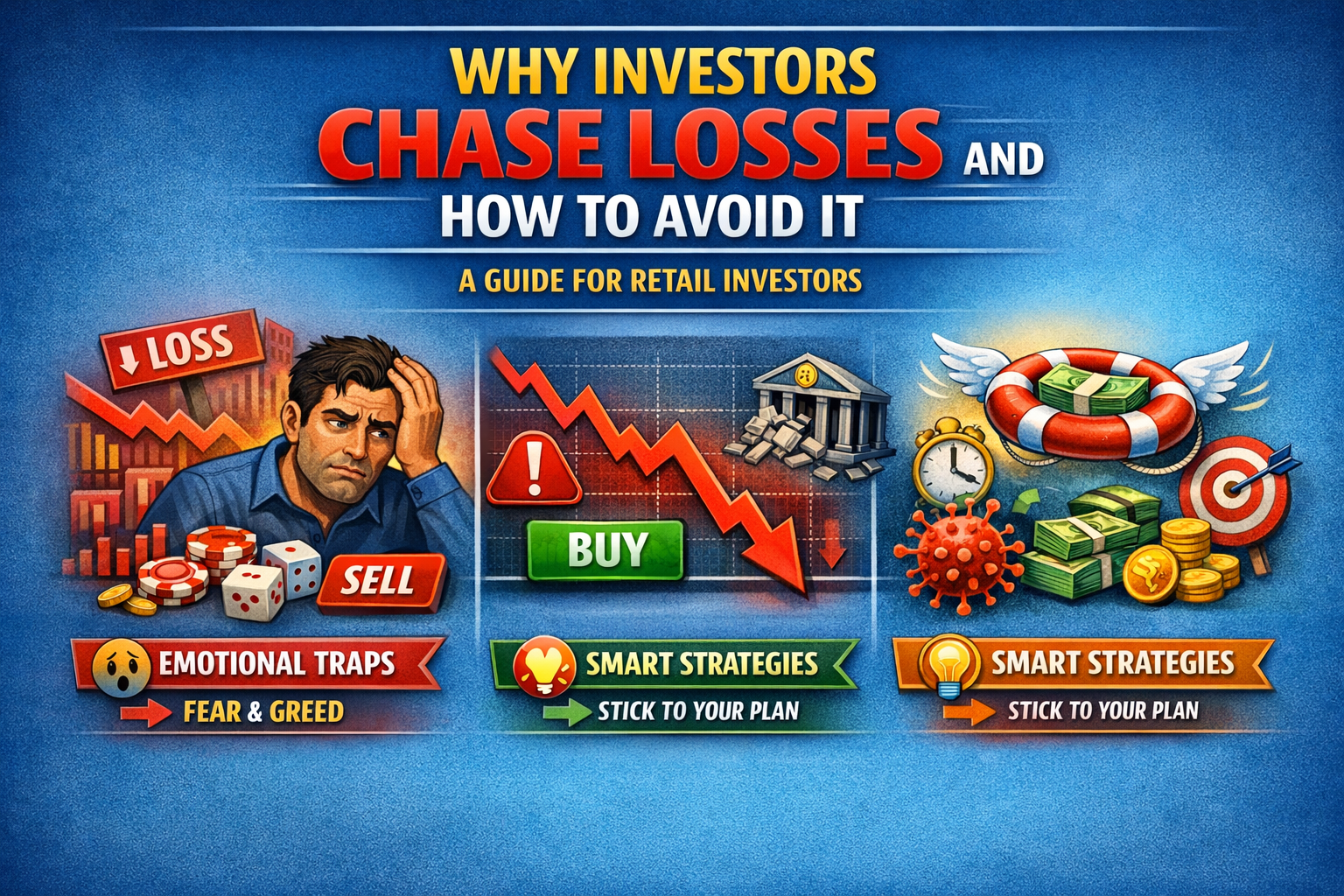
Investing in financial markets can be both exciting and daunting, especially for retail investors with limited capital. One behavioral pitfall that often ensnares even seasoned traders is the tendency to chase losses. But why do investors chase losses? And how does it impact your portfolio in the long run? In this blog post, we will explore the psychology behind loss chasing, the dangers it poses, and practical strategies to help you stay disciplined and protect your hard-earned money.
What is Loss Chasing?
Loss chasing is the behavioural tendency to increase investments to recover previous losses. Rather than accepting a loss and moving on, investors often double down or increase risk exposure in the hope of breaking even quickly. This is especially common among retail investors who have smaller capital bases and feel more pressure to “make back” their losses swiftly.
A Deeper Understanding
Imagine you invest INR 10.000, and the stock price drops 20%. Instead of cutting losses, you buy more shares to average down, hoping the price will rebound. This is loss chasing in action. While averaging down has its place, chasing losses usually involves emotional decision-making rather than rational strategy.
Cognitive Biases That Lead to Loss Chasing
Loss chasing is not just about greed or impatience; it’s rooted in well-documented cognitive biases:
1. The Disposition Effect
Investors tend to sell winners too early to "lock in gains" but hold onto losers hoping they will rebound, leading to loss chasing.
2. The Loss Aversion
According to Nobel laureate Daniel Kahneman, losses impact us psychologically more than equivalent gains. This asymmetry makes investors reluctant to accept losses, fueling attempts to recover rapidly.
3. Sunk Cost Fallacy
People continue investing time and money into a losing position because they've already committed resources, even when future prospects are poor.
4. Overconfidence Bias
Belief that one can “turn it around” and predict market moves better than others may push investors to take excessive risks chasing losses.
5. Gambler’s Fallacy
The mistaken belief that after a loss, a win is “due” encourages risk-taking on the hope of an imminent turnaround.
The Danger of Chasing Losses
Chasing losses can gravely undermine an investment portfolio, especially for retail investors who cannot afford large drawdowns.
1. Erosion of Capital Base
Increased risk-taking to recover losses can lead to larger drawdowns and potentially wipe out small investment accounts.
According to a study by Dalbar Inc., the average equity fund investor earned just 5.3% annually between 1991-2020, compared to the S&P 500's average of 10.7% — largely due to behavioral mistakes like chasing losses.
2. Emotional Stress and Poor Decision Making
Loss chasing often leads to impulsive decisions driven by frustration and fear, rather than careful analysis.
3. Compromising Long-Term Goals
Focusing on short-term loss recovery diverts attention from long-term wealth accumulation and disciplined investing.
4. Increased Transaction Costs
Frequent buying and selling to recover losses results in more brokerage fees, further eroding capital.
Strategies to Avoid Loss Chasing
Avoiding temptation to chase losses requires disciplined risk management and emotional control. Below are key strategies tailored for retail investors:
1. Set Stop Loss Orders
Using stop loss orders helps cap losses and removes emotional decision-making. For example, setting a 10% stop loss means an automatic sell if the price dips below your threshold.
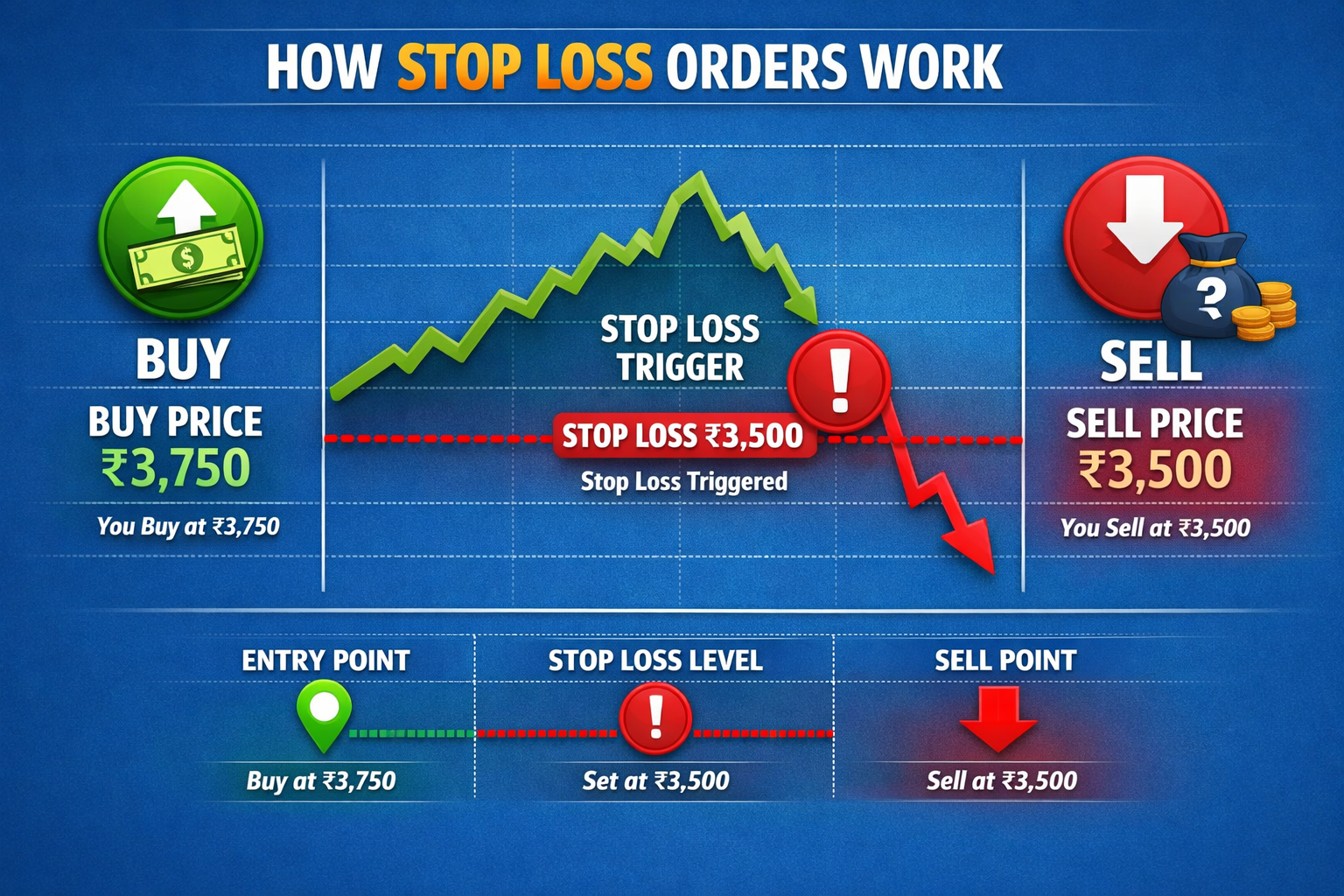
Buy Price ₹3,750 → your entry point.
Stop Loss ₹3,500 → the trigger level protecting you from deeper losses.
Sell Price ₹3,500 → automatic exit when the stop loss activates.
2. Establish a Trading Plan
Create clear investment goals, risk tolerance levels, and entry/exit rules before you invest.
3. Diversify Your Portfolio
Avoid putting all your eggs in one basket. Diversification reduces risk and the urge to chase losses in a single asset.
4. Practice Position Sizing
Limit the amount you invest in any single position, ensuring one loss won’t jeopardize your overall portfolio.
5. Adopt Dollar-Cost Averaging with Caution
While averaging down by investing fixed amounts over time can reduce average cost, don’t increase stakes impulsively to recover losses.
6. Focus on the Long-Term
Understand that market downturns are part of the journey. Focus on long-term growth rather than quick recovery wins.
7. Keep an Investment Journal
Track your trades and emotions to identify patterns of loss chasing and develop self-awareness.
8. Seek Professional Advice
Don’t hesitate to reach out for assistance tailored to your unique situation—whether through financial advisors, mentors, or reliable investment platforms. You can book a 1:1 discovery call with Potoos experts here www.calendly.com/potoos
| Year | S&P 500 Annual Return | Average Investor Return (Dalbar Study) | Key Market Events Affecting Investor Behavior |
|---|---|---|---|
| 2008 | -37% | -43% | Global Financial Crisis, leading to panic selling and loss chasing attempts |
| 2020 | +16.3% | +10% | COVID-19 market shock and volatility triggered impulsive trades |
| 2023 | +15% (approx) | Data pending | Inflation and interest rate concerns tested investor discipline |
Conclusion
Chasing losses is a natural but dangerous investor behaviour, one that can erode the financial well-being of retail investors with limited capital. By understanding the psychological traps and employing disciplined strategies like stop loss orders, diversification, and long-term focus, you can protect your portfolio from impulsive decisions.
Remember, successful investing is not about winning every trade—it’s about managing risk and staying consistent.
If you’d like personalized advice or one-on-one guidance tailored to your situation, feel free to reach out to our experts via WhatsApp +919841741237. We're here to support your investment journey every step of the way.
Frequently Asked Questions (FAQ)
Q1: Is averaging down always a bad idea?
A: Not necessarily. Averaging down can be a part of a well-thought-out strategy, especially if the asset’s fundamentals remain strong. The problem arises when it’s done emotionally as a means to chase losses.
Q2: How can I control emotions while investing?
A: Setting predefined rules, automating trades through stop losses, and sticking to a disciplined investment plan greatly helps reduce emotional biases.
Q3: What is a stop loss and how do I set it?
A: A stop loss is an order to sell a security once it reaches a particular price to limit losses. Many trading platforms allow you to set this easily when placing orders.
Q4: Can small retail investors avoid loss chasing?
A: Absolutely. With clear plans, risk management tools, and self-awareness, retail investors can minimize emotional pitfalls and grow their capital steadily.
Q5: What should I do during market corrections?
A: Avoid panic selling or chasing losses. Review your investment plan, assess fundamentals, and consider steady contributions or rebalancing your portfolio.