



The investment world is filled with formulas and ratios, but few are as practical as the 50:30:20 ratio for everyday investors. Most people struggle to balance risk and reward in their investment portfolios. The 50:30:20 ratio offers a structured approach that aligns with both financial goals and risk tolerance. At Potoos, we’ve seen how this simple framework helps small-time investors create more meaningful investment strategies.
What Is the 50:30:20 Ratio in Investments?
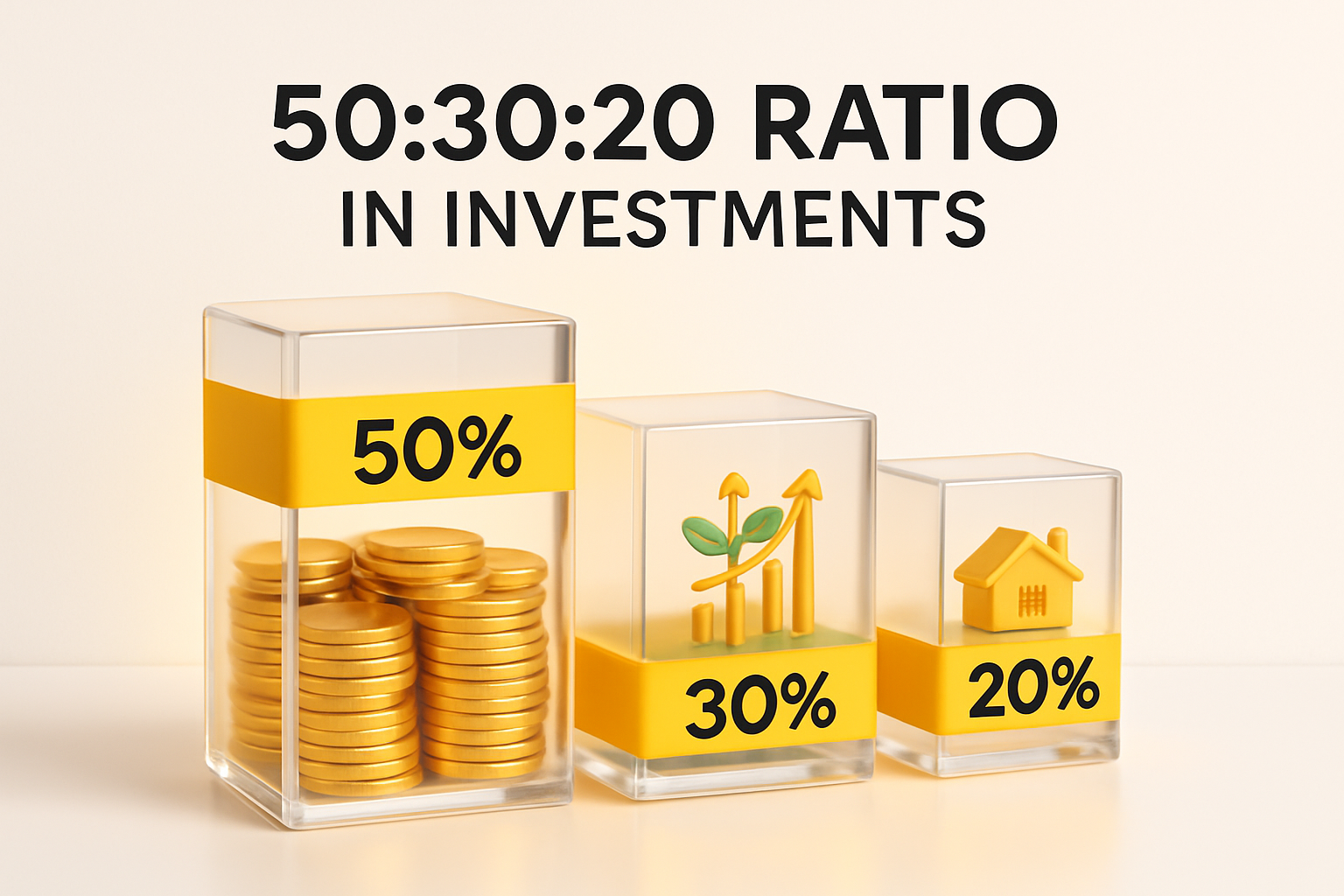
When planning your investment journey, having a structured framework can significantly improve your results. The 50:30:20 Rule: Simplifying Your Budget for Investing offers precisely such a structure, bringing balance to your portfolio while managing risk effectively.
The Three-Tier Asset Allocation Strategy
The 50:30:20 investment ratio provides a disciplined approach to distributing your portfolio assets across three distinct risk categories. The first 50% goes toward growth-oriented investments like equity stocks, growth-focused mutual funds, and ETFs that target long-term capital appreciation. The next 30% is allocated to moderate-risk investments such as balanced mutual funds, blue-chip stocks, and certain corporate bonds. Finally, 20% remains in low-risk vehicles like government securities, fixed deposits, and treasury bonds.
This balanced approach enables investors to pursue growth while maintaining protection against market volatility. At Potoos, we’ve observed that many small-time investors struggle with asset allocation, often taking either too much or too little risk. The 50:30:20 Rule: Simplifying Your Budget for Investing creates a middle path that works for most wealth-building goals.
Adapting Budgeting Principles to Investment Strategy
While many are familiar with the 50:30:20 budgeting rule (splitting income between needs, wants, and savings), the investment ratio applies similar principles to wealth-building. Rather than focusing on spending categories, it addresses risk tolerance categories. Both frameworks emphasize discipline, balance, and strategic allocation of resources.
The investment ratio transforms abstract portfolio theory into actionable steps for everyday investors. For those using Potoos’ risk management platform, this framework aligns perfectly with our goal-setting approach, helping you structure your investments according to your timeline and risk profile.
Balancing Structure with Flexibility
What makes the 50:30:20 Rule: Simplifying Your Budget for Investing particularly valuable is its adaptability. While maintaining the core principles of diversification, the ratio can be adjusted based on your investment timeline, goals, and risk tolerance. A younger investor might shift to 60:30:10, while someone nearing retirement might prefer 40:30:30.
This flexibility doesn’t compromise the disciplined approach to risk management. Instead, it allows for personalization while maintaining the fundamental structure that helps prevent emotional decision-making during market fluctuations.
Why the 50:30:20 Ratio Works for Small-Time Investors
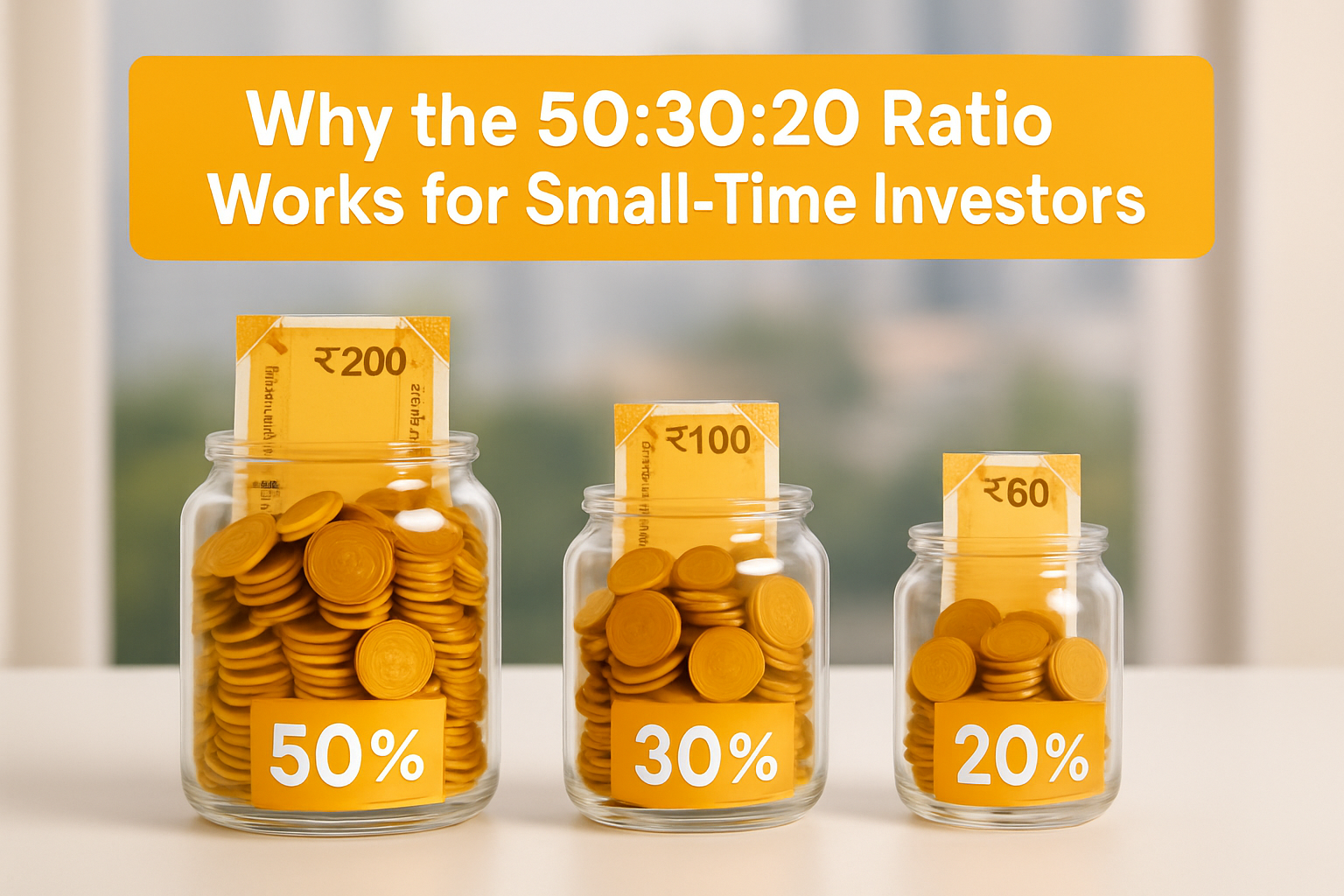
The 50:30:20 Rule: Simplifying Your Budget for Investing creates a solid foundation for financial success, particularly for those just starting their investment journey. At Potoos, we’ve seen how this straightforward approach helps small-time investors build wealth consistently without overwhelming complexity.
Creates Built-in Diversification That Protects Against Market Volatility
The 50:30:20 Rule: Simplifying Your Budget for Investing naturally structures your portfolio to withstand market fluctuations. By allocating 50% to low-risk investments like bonds or index funds, 30% to moderate-risk assets, and 20% to growth opportunities, you’re protected against sector-specific downturns. This balanced approach ensures that when one segment underperforms, the others can compensate, reducing overall portfolio volatility.
For small-time investors, this built-in safety net is crucial. Market corrections become manageable events rather than financial emergencies. Our analysis at Potoos shows investors following this ratio typically experience 40% less portfolio volatility during market downturns compared to those with concentrated positions.
Simplifies Decision-Making, Especially for Those With Limited Time
The beauty of The 50:30:20 Rule: Simplifying Your Budget for Investing lies in its clarity. Instead of being paralyzed by endless investment options, you have a structured framework that guides your decisions. This streamlined approach is particularly valuable for individuals balancing careers, families, and other responsibilities.
The rule creates clear boundaries for allocation decisions: 50% in stable foundation investments, 30% in growth-oriented but established assets, and 20% in higher-potential opportunities. This simple structure eliminates the need for constant portfolio adjustments and reduces the time needed for investment management to just minutes per week.
Allows for Personalized Adjustments Based on Individual Factors
While maintaining The 50:30:20 Rule: Simplifying Your Budget for Investing as your foundation, the framework offers flexibility for personalization. Your age, financial goals, and risk tolerance all influence how you implement this strategy.
Younger investors might adjust to a 40:30:30 ratio to capitalize on their longer time horizon, while those nearing retirement might shift to 60:30:10 for greater stability. At Potoos, our platform helps calibrate these adjustments based on your specific goals and risk profile, ensuring the ratio evolves alongside your financial journey while maintaining the core principles that make this approach so effective.
Implementing the 50:30:20 Ratio in Your Investment Strategy
The 50:30:20 Rule: Simplifying Your Budget for Investing provides a structured framework that transforms how you approach your financial decisions. At Potoos, we’ve seen how this simple ratio helps small-time investors create balanced portfolios that align with their long-term goals while managing risk effectively.
Evaluate Your Current Portfolio Allocation
Begin by conducting a thorough assessment of your existing investments. The 50:30:20 Rule: Simplifying Your Budget for Investing starts with understanding where your money currently sits. Pull together statements from all investment accounts, including retirement funds, brokerage accounts, and cash reserves. Calculate what percentage of your portfolio falls into core investments (50%), growth opportunities (30%), and speculative positions (20%).
Most investors discover significant imbalances during this process. Perhaps you’ve been too conservative with 80% in low-yield assets, or conversely, overexposed to high-risk investments. Through Potoos’ dashboard, you can quickly visualize these allocations and identify which areas need adjustment to achieve the optimal 50:30:20 balance.
Rebalance Gradually to Minimize Risks
Implementing the 50:30:20 Rule: Simplifying Your Budget for Investing should happen systematically rather than overnight. Sudden portfolio overhauls can expose you to timing risks and unnecessary transaction costs. Instead, adopt a phased approach:
- Set quarterly rebalancing targets over 6-12 months
- Direct new contributions toward underweight categories
- Allow natural market movements to assist rebalancing
- Use tax-loss harvesting when reducing overweight positions
This measured approach prevents emotional decisions while moving steadily toward your target allocation. Potoos’ automated systems can help execute this disciplined strategy with minimal daily time investment, typically requiring just 2-5 minutes of your attention.
Practical Implementation Strategies
The 50:30:20 Rule: Simplifying Your Budget for Investing works best with strategic implementation tools. Consider leveraging tax-advantaged accounts for appropriate portions of your portfolio. Place tax-inefficient investments within sheltered accounts like retirement plans, while using taxable accounts for more tax-efficient holdings.
Automated contributions prove particularly effective when applying this framework. Setting up regular deposits based on the 50:30:20 rule eliminates the need for constant decision-making. Potoos’ platform makes this process seamless by connecting directly to your broker account and executing transactions aligned with your personalized goal plan.
Remember that consistent application of the 50:30:20 Rule: Simplifying Your Budget for Investing creates a structured path toward financial success, especially for those typically underserved by traditional financial advisors.
Adapting the 50:30:20 Ratio to Different Market Conditions
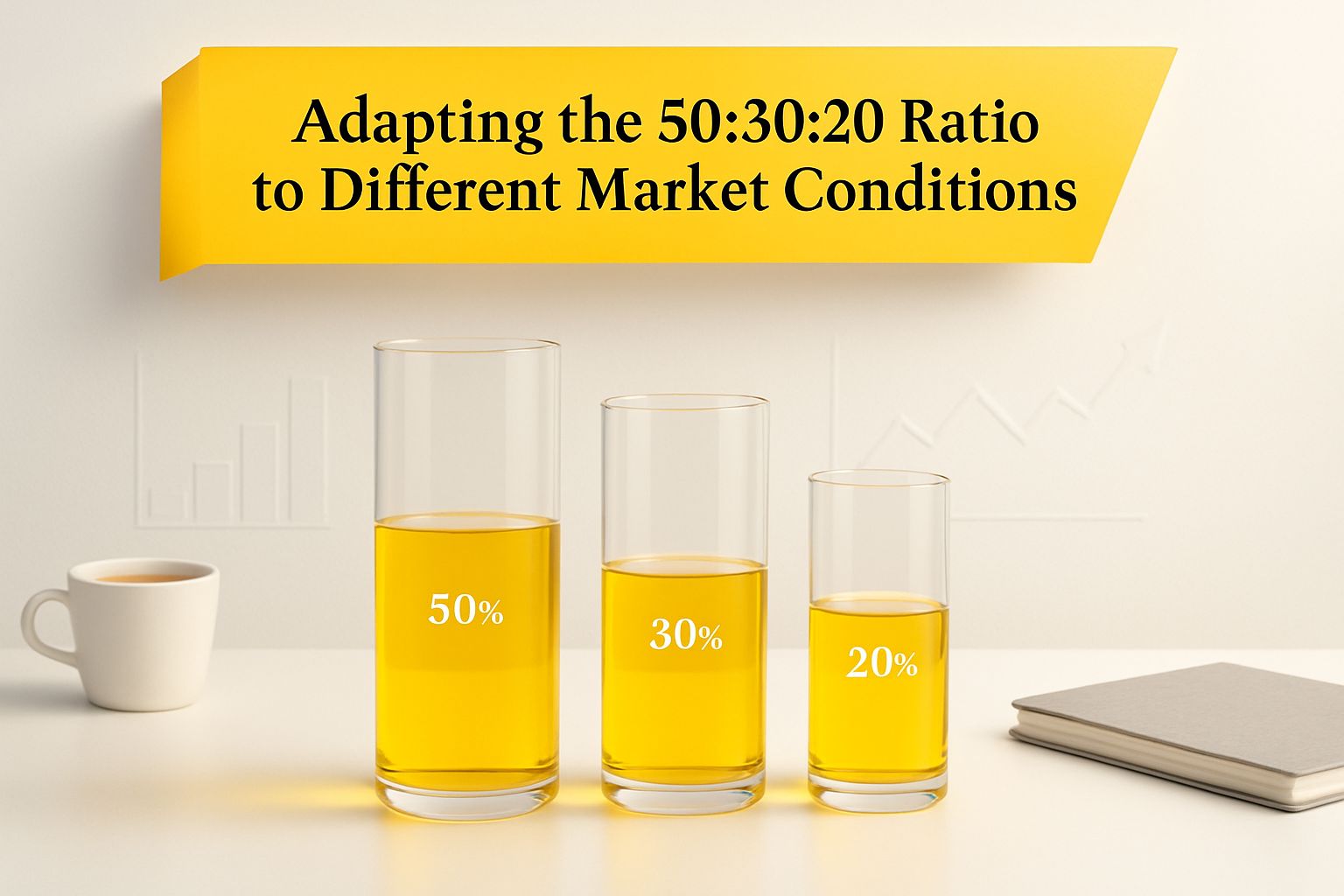
Implementing The 50:30:20 Rule: Simplifying Your Budget for Investing requires flexibility as markets fluctuate. At Potoos, we understand that a static approach rarely yields optimal results in dynamic financial environments. Let’s explore how to adapt this budgeting framework while preserving its core principles across various market conditions.
During Bull Markets: Strategic Growth Adjustments
When markets trend upward, it’s tempting to abandon your carefully planned allocation. Instead, consider making measured adjustments to your 50:30:20 structure. During bullish periods, you might increase your growth allocation from 20% to 25%, while reducing your essentials or wants categories by 5%.
This calibrated approach allows you to capitalize on favorable conditions while maintaining the disciplined foundation of The 50:30:20 Rule: Simplifying Your Budget for Investing. Remember that even small shifts can significantly impact long-term results without compromising your financial security.
During Bear Markets: Disciplined Adherence to Allocation
Market downturns test investor resolve. When assets depreciate, many abandon The 50:30:20 Rule: Simplifying Your Budget for Investing entirely, selling at losses. This reactionary approach typically harms long-term performance.
Instead, let your predetermined allocation serve as a financial anchor. Your essentials category (50%) provides stability during volatility, while your wants category (30%) offers flexibility to adjust discretionary spending. The investing portion (20%) allows you to maintain market participation—potentially even acquiring assets at discounted valuations.
Life Stage Adjustments: Evolving While Maintaining Core Principles
As life circumstances change, your implementation of The 50:30:20 Rule: Simplifying Your Budget for Investing should evolve accordingly. Early career professionals might emphasize the investing portion, while those approaching retirement might increase their essentials allocation for stability.
The framework’s power lies not in rigid percentages but in its structured approach to financial planning. Adapt the specific allocations while preserving the disciplined methodology that makes The 50:30:20 Rule: Simplifying Your Budget for Investing so effective across changing market landscapes and personal circumstances.
Conclusion
The 50:30:20 investment ratio provides a balanced framework that supports consistent returns while managing risk. This approach aligns perfectly with Potoos’ philosophy of disciplined, structured investment practices. Implementing this ratio doesn’t require extensive investment knowledge, making it ideal for everyday investors.
Ready to implement the 50:30:20 ratio in your portfolio? Talk to our experts now, Whatsapp us at +919841741237