


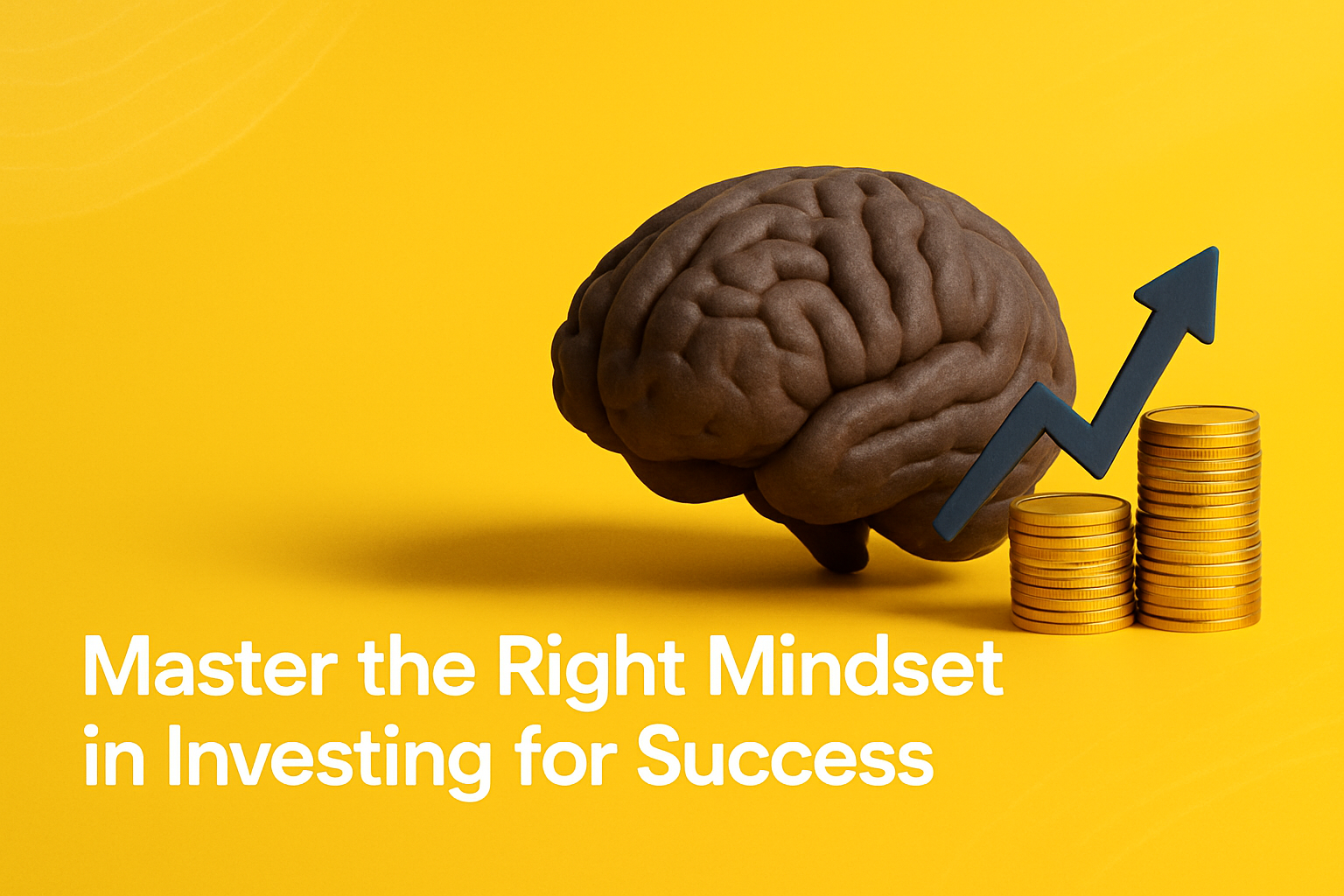
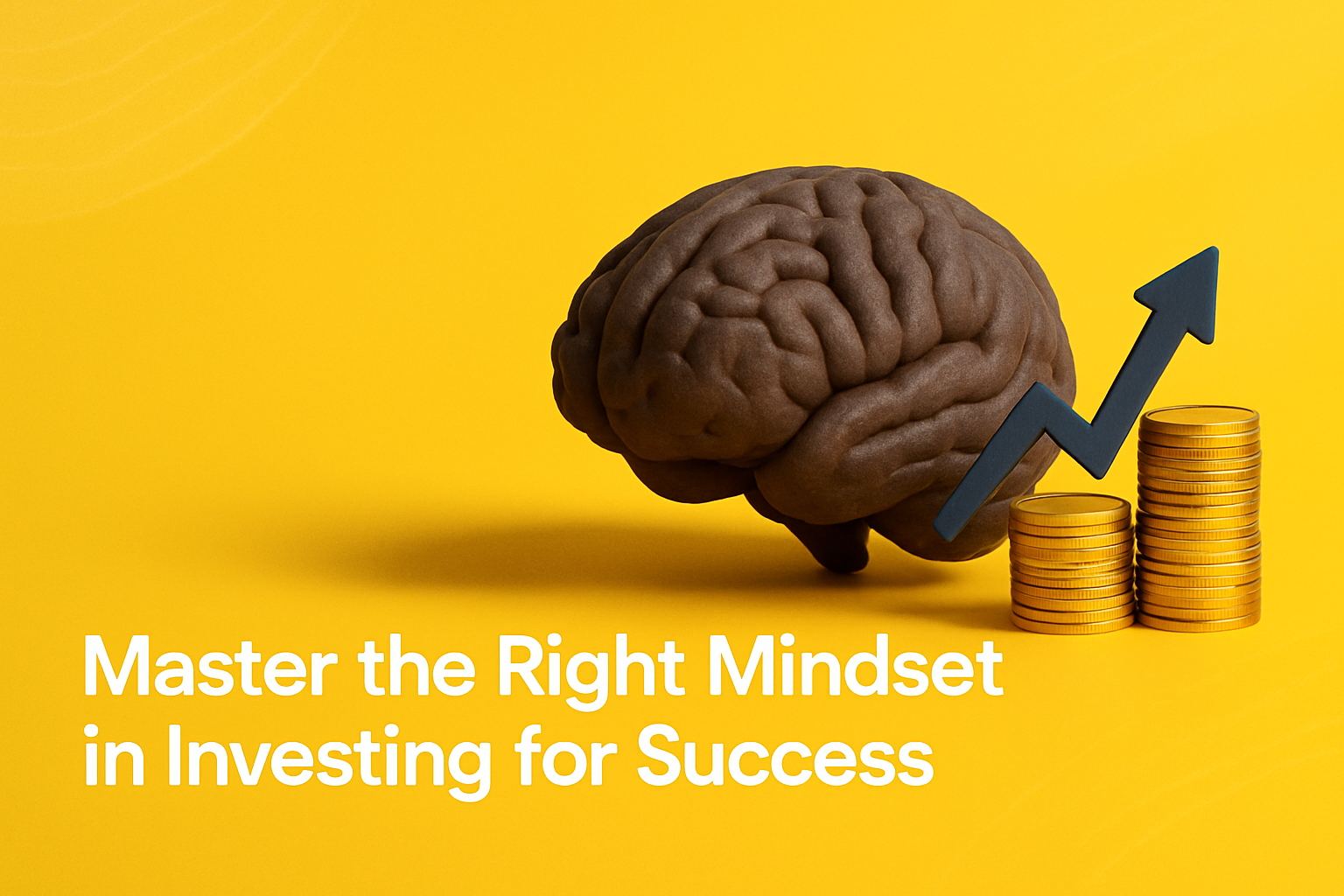
Mastering investor psychology starts with understanding one fundamental truth: your biggest enemy in the market isn’t economic downturns or unpredictable events—it’s your own mind. Research shows that emotional decision-making accounts for up to 80% of investment losses among retail investors. The difference between successful investors and those who struggle isn’t necessarily intelligence or luck; it’s developing the right mindset in investing.
Your relationship with money shapes every investment decision you make. Fear pushes you to sell during market dips. Greed tempts you to chase hot stocks. Hope keeps you holding losing positions too long. These emotional responses are natural, but they’re also costly.
The good news? You can train your mind to work for you rather than against you. Building a strong investment mindset isn’t about eliminating emotions entirely—it’s about recognizing them and having systems in place to make logical decisions despite them.
Building a Strategic Investment Mindset
Logic Over Emotions in Investment Decisions
Your brain is wired to protect you from immediate threats, not to build long-term wealth. This creates a fundamental conflict in investing. When markets drop, your survival instincts scream “danger” and push you to sell. When markets soar, your brain interprets rising prices as safety and urges you to buy more.
Cognitive biases distort rational thinking and lead to poor investment choices. Confirmation bias makes you seek information that supports your existing beliefs while ignoring contradictory evidence. Overconfidence bias tricks you into thinking you can predict market movements better than you actually can.
The solution isn’t to fight these biases—it’s to acknowledge them and create rules that bypass emotional decision-making. Set clear criteria for buying and selling before you invest. When emotions run high, rely on your predetermined rules instead of your gut feelings.
Long-term Thinking vs Short-term Speculation
Long-term investment approaches consistently outperform short-term trading strategies for most investors. The stock market rewards patience, not quick reflexes. Companies with strong fundamentals grow their value over years and decades, not days and weeks.
Short-term market movements are largely unpredictable noise. Daily price fluctuations often have little connection to a company’s actual performance or future prospects. Trying to profit from these movements is speculation, not investing.
Successful investors understand that building wealth takes time. They focus on companies with sustainable competitive advantages and growing earnings. They ignore daily market chatter and concentrate on long-term trends. This mindset in investing helps them stay calm during volatile periods and benefit from compound growth.
Developing Patience and Discipline
Strategic consistency beats reactive trading every time. Discipline means sticking to your investment plan when everyone around you is panicking or getting euphoric. It means making regular investments regardless of market conditions.
Patience allows your investments to compound over time. Every year you stay invested gives your money more time to grow. Frequent buying and selling not only generates transaction costs but also increases the likelihood of making emotional mistakes.
Create simple rules and follow them consistently. Invest a fixed amount every month. Review your portfolio quarterly, not daily. Focus on your long-term goals instead of short-term market noise.
Psychology of Successful Investors
Overcoming Fear and Greed Cycles
Market timing is one of the most dangerous traps in investing. Buy-low, sell-high behavior sounds logical but proves nearly impossible to execute consistently. Fear makes you sell when prices are already low. Greed makes you buy when prices are already high.
Professional fund managers with teams of analysts and sophisticated tools struggle to time markets successfully. Individual investors with limited time and resources have even lower odds of success.
The solution is to ignore market timing entirely. Focus on time in the market, not timing the market. Make regular investments regardless of current prices. This approach ensures you buy more shares when prices are low and fewer when prices are high, naturally averaging your costs over time.
Managing Loss Aversion and FOMO
Loss aversion and FOMO distort rational decision-making in predictable ways. People feel the pain of losing money roughly twice as strongly as the pleasure of gaining the same amount. This makes investors overly conservative and causes them to miss growth opportunities.
FOMO (fear of missing out) has the opposite effect. Seeing others profit from trendy investments creates pressure to join in, often at the worst possible time. Social media amplifies this effect by showcasing success stories while hiding failures.
Recognize these biases when they appear. Accept that some investments will lose money—that’s normal and expected. Accept that you’ll miss some profitable opportunities—that’s also normal. Focus on making good decisions with available information rather than perfect decisions with hindsight.
Building Confidence Through Knowledge
Education reduces emotion-driven actions by giving you a framework for understanding market behavior. The more you understand about investing fundamentals, the less likely you are to panic during market downturns or get swept up in speculative bubbles.
Start with basic concepts: how companies generate profits, what drives stock prices over time, how different asset classes behave. Read annual reports of companies you’re considering. Understand the industries where you’re investing.
Knowledge also helps you recognize when you don’t know something. This prevents overconfidence and encourages you to seek advice or stick to simple investment strategies when complex situations arise.
Risk Management Mental Framework
Accepting Calculated Risks vs Gambling
Strategy-based risk differs fundamentally from speculative gambling. Calculated risks involve analyzing potential outcomes, understanding probabilities, and having logical reasons for your decisions. Gambling involves hoping for favorable outcomes without rational justification.
Every investment carries risk—even “safe” investments like government bonds can lose purchasing power to inflation. The goal isn’t to eliminate risk but to take risks that offer appropriate compensation for the potential losses.
Diversification helps manage risk by spreading it across different investments. Position sizing ensures that no single investment can destroy your portfolio. These strategies let you take reasonable risks while protecting your capital.
Portfolio Protection Strategies
Diversification and position sizing are your primary defenses against major losses. Don’t put all your money in one stock, one sector, or even one asset class. Spread your investments across different companies, industries, and types of assets.
Position sizing means limiting how much you invest in any single opportunity. A good rule of thumb is to never risk more than 5-10% of your portfolio on any individual stock. This prevents one bad decision from causing permanent damage to your wealth.
Regular rebalancing maintains your desired allocation over time. As some investments grow faster than others, your portfolio can become overweighted in certain areas. Rebalancing forces you to sell high-performing assets and buy underperforming ones, which naturally implements a buy-low, sell-high strategy.
When to Cut Losses and Take Profits
Predefined exit rules prevent emotional second-guessing when making difficult decisions. Decide before you invest how much loss you’re willing to accept and what conditions would make you sell.
Some investors use stop-loss orders that automatically sell if a stock drops by a certain percentage. Others prefer to evaluate the fundamental reasons for price changes before making decisions. Both approaches can work if applied consistently.
Taking profits is often harder than cutting losses because it means giving up potential future gains. Set realistic profit targets and stick to them. Remember that no one ever went broke taking profits, but many people have lost fortunes by holding too long.
Goal-Oriented Investment Thinking
Setting Clear Financial Objectives
Goal clarity drives strategic alignment in all your investment decisions. Vague goals like “get rich” or “make money” don’t provide enough direction to create effective strategies. Specific goals like “save ₹50 lakhs for retirement in 20 years” give you clear targets to work toward.
Different goals require different approaches. Short-term goals need conservative investments that preserve capital. Long-term goals can accept more volatility in exchange for higher growth potential.
Write down your goals and review them regularly. Include specific amounts, timeframes, and purposes. This helps you stay motivated during difficult periods and makes investment decisions easier.
Aligning Investment Strategy with Life Goals
Different life stages require adjusted investment approaches based on changing priorities and risk tolerance. Young investors with stable incomes can afford to take more risks for higher potential returns. Older investors approaching retirement need to protect accumulated wealth.
Your investment timeline affects everything from asset allocation to specific security selection. Money needed within five years should be invested conservatively. Money not needed for decades can be invested aggressively for maximum growth.
Regular life changes—marriage, children, job changes, health issues—may require adjustments to your investment strategy. Review your situation annually and make gradual changes as needed.
Measuring Progress and Adjusting Plans
Quarterly reviews beat reactive adjustments to market noise by keeping your focus on long-term progress rather than short-term fluctuations. Check whether you’re on track to meet your goals, not whether your portfolio has made money in the last month.
Compare your results to appropriate benchmarks, not to individual stocks or hot investment tips. If you’re investing in diversified Indian equity funds, compare your returns to broad market indices like the Nifty 50, not to the best-performing stock of the year.
Make adjustments based on changes in your personal situation, not market performance. Increase your investment amounts when your income grows. Decrease your risk tolerance as you approach your goal dates. These systematic changes are more effective than trying to outsmart the market.
Common Mindset Mistakes to Avoid
Chasing Market Trends and Hot Tips
Fundamentals-based approaches outperform trend-following strategies over meaningful time periods. Popular investments often become popular after most of the gains have already occurred. By the time everyone is talking about an opportunity, it’s usually too late to profit significantly.
Hot tips and stock recommendations rarely work out as promised. The people sharing these tips often have ulterior motives or incomplete information. Even when tips are given with good intentions, the timing and your personal situation may make them inappropriate.
Focus on understanding businesses rather than predicting stock movements. Look for companies with strong competitive positions, growing markets, and competent management teams. These fundamental factors drive long-term returns more reliably than technical analysis or market sentiment.
Overconfidence After Early Wins
Risk escalation despite initial successes is a common pattern among new investors. Early profits often result from luck or favorable market conditions rather than skill. This creates false confidence that leads to larger bets and riskier strategies.
The stock market has a way of humbling overconfident investors. What works in one market environment may fail completely in different conditions. Bull markets make everyone look smart, but bear markets reveal who was truly prepared.
Stay humble and stick to your original risk management rules regardless of recent performance. Treat early wins as encouragement to continue learning rather than proof that you’ve mastered investing.
Analysis Paralysis and Perfectionism
Indecision costs more than minor tactical errors in most investment situations. Waiting for perfect information or ideal market conditions means missing years of potential compound growth. The best time to start investing was 20 years ago; the second-best time is now.
Perfect investment decisions don’t exist because the future is unknowable. You can make good decisions with available information, but you can’t predict every possible outcome. Accept that some decisions will be wrong and focus on making more good decisions than bad ones.
Set reasonable standards for investment decisions. Gather enough information to make informed choices, then act. You can always adjust your strategy as you learn more, but you can’t recover time lost to indecision.
|
Investment Approach |
Emotional Driver |
Outcome |
Better Alternative |
|---|---|---|---|
|
Market Timing |
Fear and Greed |
Poor Returns |
Regular Investment |
|
Hot Tips |
FOMO |
Unpredictable |
Research-Based |
|
Perfect Timing |
Analysis Paralysis |
Missed Opportunities |
Good Enough |
|
Trend Chasing |
Overconfidence |
Late Entry |
Fundamental Analysis |
Frequently Asked Questions
What’s the most important mindset shift for new investors? Moving from short-term thinking to long-term planning makes the biggest difference. Focus on building wealth over years and decades rather than making quick profits. This change in perspective helps you ignore daily market noise and stick to proven strategies.
How do I stop emotional investing decisions? Create clear rules before you invest and follow them consistently. Decide your buy and sell criteria when you’re calm and rational, not when markets are volatile. Having predetermined rules helps you bypass emotional responses during stressful periods.
Should I invest during market downturns? Market downturns often provide the best buying opportunities for long-term investors. Lower prices mean you can buy more shares with the same amount of money. Continue your regular investment plan regardless of market conditions—this strategy naturally helps you buy low over time.
How much should I diversify my portfolio? Diversification depends on your knowledge and risk tolerance, but most individual investors benefit from broad diversification. Consider investing in 15-20 different stocks across various sectors, or use mutual funds and ETFs to achieve instant diversification with smaller amounts.
What’s the difference between investing and gambling? Investing involves analyzing businesses and making decisions based on logical reasoning and research. Gambling relies on luck and hope without rational justification. Good investing accepts reasonable risks for appropriate compensation; gambling takes unnecessary risks for entertainment or quick profits.
Developing the right mindset in investing transforms your relationship with money and markets. Success comes from patience, discipline, and logical decision-making rather than trying to outsmart other investors or time market movements perfectly.
The strategies discussed here—focusing on long-term goals, managing emotions, diversifying risks, and avoiding common mistakes—form the foundation of successful investing. These principles work regardless of market conditions or economic cycles.
Remember that building wealth is a marathon, not a sprint. Every successful investor has made mistakes and learned from them. The key is making more good decisions than bad ones and giving your money time to compound.
Your investment journey starts with changing how you think about money and markets. Focus on what you can control: your savings rate, investment choices, and emotional responses. Let time and compound growth handle the rest.
Ready to transform your investment approach with systematic risk management and clear goal-setting? Potoos offers an exclusive platform designed specifically for investors who want to build lasting wealth through smart strategies and disciplined execution. Talk to our experts now, Whatsapp us at +919841741237 to learn how our guided approach can help you invest with confidence and clarity.