



Financial security for loved ones remains a top priority for 78% of Indians when considering insurance options. Navigate the crucial differences between life insurance and term insurance to make an informed decision. We’ll break down how these insurance types work differently and which might better align with your financial goals.
Understanding the Fundamental Differences Between Life Insurance and Term Insurance
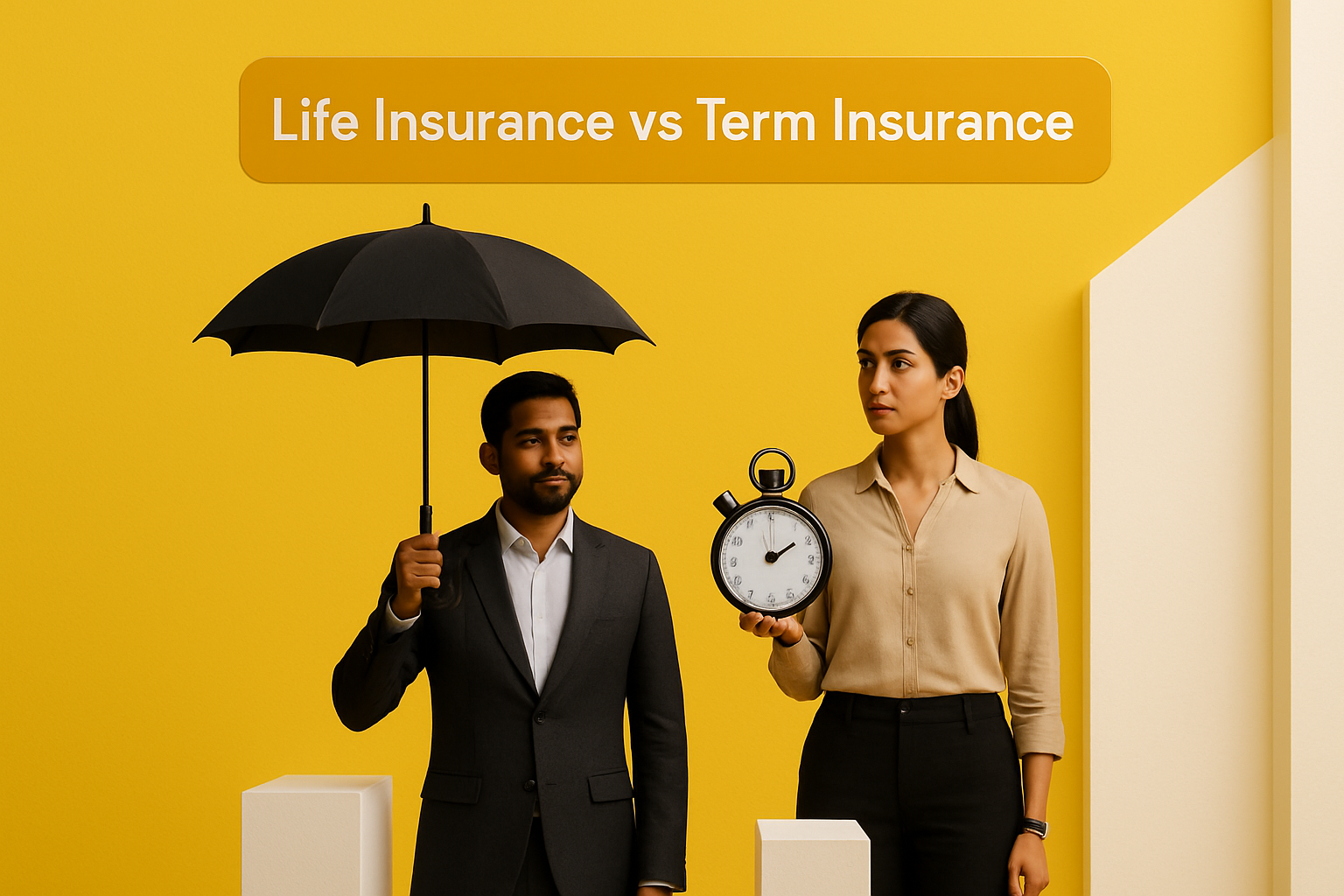
Making informed decisions about insurance products is crucial for protecting your financial future. When comparing life insurance vs term insurance: which one is right for you?, several key differences emerge that can significantly impact your coverage and financial strategy.
Coverage Duration Comparison
Life insurance and term insurance differ fundamentally in how long they protect you. Permanent life insurance provides lifelong protection that remains in force as long as premiums are paid, creating a guaranteed financial safety net for your dependents regardless of when you pass away. This lifelong coverage explains why life insurance vs term insurance pricing differs so dramatically.
Term insurance, on the other hand, offers protection for a specific period—typically 10, 20, or 30 years. Once this term expires, so does your coverage, unless you renew (often at much higher rates). This makes term insurance an ideal solution for specific periods of financial vulnerability, such as when raising children or paying off a mortgage. At Potoos, we help investors understand how these different timeframes align with their overall financial goals.
Premium Structure and Costs
The cost difference between these insurance types is substantial. Term insurance premiums typically run 5-10 times lower than comparable whole life policies. This significant price gap in the life insurance vs term insurance decision makes term policies more accessible for young families and those with budget constraints.
With term insurance, you pay only for pure protection without additional features. Age plays a crucial role in premium calculations—the younger you are when purchasing either policy type, the lower your premiums. A 30-year-old will pay considerably less than a 50-year-old for the same coverage amount.
Policy Benefits Beyond Death Coverage
Life insurance offers additional features beyond the death benefit. Most permanent policies build cash value over time that you can borrow against or withdraw under certain conditions. This cash accumulation component makes life insurance function as both protection and a financial asset.
Term insurance provides pure death benefit protection without cash value accumulation. When evaluating life insurance vs term insurance, consider that term policies offer straightforward protection at lower costs but lack the savings component. For Potoos members, this distinction is important when balancing protection needs with investment strategies aimed at achieving specific financial goals.
When Term Insurance Makes More Strategic Sense
When considering Life Insurance vs Term Insurance: Which One is Right for You?, many investors find that term insurance offers distinct advantages in specific situations. At Potoos, we help everyday investors understand when term policies might be the more strategic choice for their financial protection needs. Let’s explore the scenarios where term insurance can be particularly beneficial.
Financial Protection During Key Life Stages
Term insurance provides focused coverage during critical financial responsibility periods in your life. For young families with mortgages, dependents, and education expenses, term policies deliver maximum protection at minimal cost. According to industry data, a 30-year term policy can offer 5-10 times more coverage than permanent insurance at the same premium.
This approach aligns perfectly with Potoos’ risk management philosophy—protecting what matters most during high-vulnerability periods. When evaluating Life Insurance vs Term Insurance: Which One is Right for You?, consider your current life stage and financial obligations. Term insurance creates a safety net exactly when your family would be most financially vulnerable.
Combining Term Insurance with Strategic Investments
The “buy term and invest the difference” strategy represents a core financial planning principle. By purchasing affordable term coverage and directing the savings (compared to whole life premiums) into strategic investments, you can potentially build greater wealth.
At Potoos, we help clients implement this approach by:
- Calculating appropriate coverage amounts
- Identifying premium savings opportunities
- Directing those savings into targeted investments aligned with your goals
This strategy often yields superior long-term results when comparing Life Insurance vs Term Insurance: Which One is Right for You?, especially for those with discipline and investment knowledge.
Conversion and Flexibility Options
Modern term policies offer remarkable flexibility through convertibility features and term laddering strategies. Convertibility allows you to transform your term policy into permanent coverage without additional medical underwriting—ideal if your health deteriorates.
Term laddering—purchasing multiple term policies with different expiration dates—provides tailored coverage that adjusts as your needs change. This creates a custom protection strategy that reflects your evolving financial journey.
When evaluating Life Insurance vs Term Insurance: Which One is Right for You?, these flexible features often make term insurance the more adaptable choice who value strategic financial planning.
When Traditional Life Insurance Offers Better Value
Choosing between life insurance options can significantly impact your long-term financial health. While term insurance provides temporary coverage, traditional life insurance offers distinct advantages in certain circumstances.
Long-Term Financial Planning Benefits
Traditional life insurance provides guaranteed coverage regardless of health changes throughout your lifetime. Unlike term policies that expire after a set period, permanent life insurance remains in force as long as premiums are paid. This creates a financial safety net that evolves with your changing needs.
For people who are planning decades ahead, this permanence provides peace of mind knowing that your coverage won’t disappear when you might need it most. As health conditions develop with age, having locked-in coverage becomes increasingly valuable. Life Insurance vs Term Insurance: Which One is Right for You? often depends on this long-term perspective—particularly for those with dependents who need protection beyond a typical 20-30 year term period.
Cash Value Growth and Policy Loans
One of the most significant advantages of traditional life insurance is the cash value component that builds over time. This feature essentially creates a supplemental investment alongside your death benefit protection. The cash value grows tax-deferred and can be accessed through policy loans during your lifetime.
Investors seeking diversification beyond market investments, this cash value feature provides:
- A conservative growth component in your portfolio
- Access to funds without credit checks
- Flexibility to borrow against your policy without mandatory repayment schedules
- Potential dividend payments (with participating policies)
When considering Life Insurance vs Term Insurance: Which One is Right for You?, this built-in savings mechanism can be particularly valuable for disciplined savers.
Tax Advantages and Estate Planning
Traditional life insurance offers notable tax benefits that term insurance cannot match. The cash value grows tax-deferred, and death benefits typically pass to beneficiaries income-tax-free. For estate planning purposes, permanent life insurance creates an immediate estate for heirs while potentially reducing tax liabilities.
Potoos clients often leverage these policies to:
- Create tax-advantaged inheritance vehicles
- Pay estate taxes without liquidating other assets
- Equalize inheritances among heirs
- Provide business continuity funding
When evaluating Life Insurance vs Term Insurance: Which One is Right for You?, these sophisticated planning capabilities often make traditional policies the preferred choice for wealth transfer and estate preservation strategies.
Making the Right Choice for Your Financial Goals

When deciding between Life Insurance vs Term Insurance: Which One is Right for You?, understanding your specific needs is crucial. At Potoos, we help everyday investors make informed decisions that align with their financial objectives. The right insurance choice forms a critical component of your risk management strategy, complementing your investment approach.
Assessing Your Protection Needs
Determining adequate coverage requires methodical calculation rather than guesswork. Start by multiplying your annual income by 10-15 to establish a baseline for Life Insurance vs Term Insurance: Which One is Right for You? consideration. Next, add outstanding debts including mortgage, education loans, and credit cards. For parents, factor in future education expenses for children.
Term insurance typically offers higher coverage at lower premiums, making it suitable for pure protection needs. Whole life insurance, while costlier, builds cash value over time. Your protection needs should reflect your family structure, financial dependencies, and existing investments.
Pro tip: Review your coverage needs every 3-5 years or after major life events like marriage, childbirth, or property purchase.
Policy Comparison Framework
When evaluating Life Insurance vs Term Insurance: Which One is Right for You?, look beyond premium costs. Consider these factors:
- Policy duration: Term policies expire after a specific period while whole life provides lifetime coverage
- Premium structure: Fixed vs increasing premiums
- Cash value accumulation: Whole life builds equity; term does not
- Flexibility: Rider options, convertibility provisions
- Tax implications: Premium payment and benefit taxation differences
The ideal choice depends on your age, financial responsibilities, and investment strategy. Younger individuals with limited budgets often benefit from term policies, while those seeking insurance with investment components might consider whole life options.
Integrating Insurance into Your Investment Strategy
Insurance should complement rather than compete with your investment approach. When deciding on Life Insurance vs Term Insurance: Which One is Right for You?, consider how it fits your broader financial picture.
Term insurance frees capital for higher-return investments through other vehicles. This separation of protection and growth goals often creates a more efficient portfolio. Whole life insurance, meanwhile, provides forced savings with conservative returns and tax advantages.
At Potoos, we recommend maintaining a balanced protection-to-investment ratio based on your risk tolerance and financial goals.
Conclusion
Both life and term insurance serve important but different roles in financial planning. Term insurance typically offers more affordable pure protection, while whole life provides lifetime coverage with additional features. Your specific needs, budget, and long-term goals should guide your decision.
Take the first step toward financial security, talk to Potoos experts now, WhatsApp us at +919841741234