



“Your relationship with money wasn’t formed yesterday—it’s been decades in the making.” From childhood lessons to early paychecks, every financial moment shapes how you think about wealth. We make hundreds of money decisions daily without considering the roots of our habits. These tendencies aren’t purely logical—they’re shaped by personal experiences. Whether you’re starting out or seeking to understand your own instincts, recognizing how your past guides today’s decisions can transform your financial future.
Personal Life Experiences That Impact Financial Behavior

Did you know that your childhood dinner table conversations about money are still guiding your investment decisions today? Personal life experience and its impact on money making extends far beyond what most people realize, shaping everything from how much risk we’re willing to take to whether we save or spend our first paycheck.
Family Financial Conversations Establish Early Attitudes Toward Wealth and Scarcity
The way your family talked about money—or avoided talking about it—created your financial blueprint. Children who heard phrases like “money doesn’t grow on trees” often develop scarcity mindsets that make them overly cautious investors later in life.
Conversely, families that discussed money openly, including investment strategies and financial planning, tend to raise children who view wealth as achievable rather than something reserved for others. These early conversations create mental models that influence whether you see opportunities or obstacles when markets fluctuate.
Early Money Lessons Shape Lifelong Saving or Spending Habits
Your first experiences with money—whether earning pocket money through chores or watching parents stress over bills—establish patterns that persist for decades. Personal life experience and its impact on money making becomes evident when examining how childhood lessons translate into adult behavior.
Someone who learned to save every rupee might struggle with necessary investment risks, while those rewarded for immediate gratification may find systematic investing challenging. These ingrained habits operate subconsciously, affecting everything from emergency fund creation to retirement planning consistency.
Socioeconomic Background Determines Risk Tolerance and Investment Preferences
Growing up in different economic circumstances creates distinct approaches to financial risk. Families with stable incomes often produce adults comfortable with moderate market volatility, while those who experienced financial instability may prefer conservative approaches that prioritize capital preservation over growth.
Personal life experience and its impact on money making also shows in investment choices—some gravitate toward familiar assets like real estate, while others embrace market-based investments. Understanding these patterns helps investors recognize when emotions rather than logic drive their financial decisions.
Career and Income Experiences Shaping Investment Choices

Personal life experience and its impact on money making begins the moment you receive your first paycheck. The way you handle that initial income often sets patterns that persist throughout your financial journey. Your career path, with its ups and downs, directly shapes how you approach investing and risk management.
First Job Experiences Impact Long-Term Career and Investment Planning
Your first job does more than just pay bills—it creates your financial blueprint. Many investors who started with low-paying positions tend to prioritize steady, conservative investments later in life. They remember the struggle of making ends meet and prefer guaranteed returns over high-risk opportunities.
Consider someone who began their career during an economic downturn. They learned early that job security isn’t guaranteed, making them more likely to build substantial emergency funds before investing. This caution often extends to their investment choices, favoring fixed deposits and government bonds over equity markets.
Periods of Income Volatility Affect Emergency Fund Strategies and Preference for Stability
Income instability teaches powerful lessons about financial preparedness. Freelancers, commission-based sales professionals, and small business owners know this reality well. Personal life experience and its impact on money making becomes evident when irregular income forces you to think differently about cash flow.
These experiences typically create investors who maintain larger emergency funds—sometimes 8-12 months of expenses instead of the standard 3-6 months. They also gravitate toward liquid investments and diversified portfolios that can weather income droughts.
Professional Growth Influences Confidence in Taking Calculated Financial Risks
Career advancement brings both higher income and increased financial confidence. As professionals climb the ladder, they often become more willing to explore equity markets, mutual funds, and even alternative investments. Success at work translates to belief in their ability to research and choose profitable investments.
However, personal life experience and its impact on money making varies greatly. Some high earners become overconfident and take excessive risks, while others use their increased income to build more sophisticated, balanced portfolios focused on long-term wealth creation.
Understanding these patterns helps investors recognize their own biases and make more informed decisions about their financial future.
Relationship and Family Financial Lessons

Personal life experience and its impact on money making becomes most evident when relationships and family dynamics enter the picture. These connections reshape how we approach wealth building in ways that textbooks simply can’t teach.
Managing Money with a Partner Introduces New Approaches to Financial Goals
Combining finances with a partner creates an entirely new financial ecosystem. Personal life experience and its impact on money making shifts dramatically when two people merge different spending habits, saving patterns, and investment philosophies.
One person might prefer aggressive growth stocks while their partner leans toward conservative mutual funds. These differences often lead to balanced portfolios that neither would have created alone. Couples frequently discover investment strategies through compromise – perhaps splitting allocations between high-risk ventures and stable assets.
The process teaches valuable lessons about diversification and risk tolerance that solo investors might miss entirely.
Supporting Family Changes Risk Appetite and Investment Timelines
Starting a family transforms financial planning overnight. Personal life experience and its impact on money making takes on new meaning when considering children’s education costs, healthcare needs, and long-term security.
Parents typically shift from high-risk investments to more stable options. The timeline for wealth building extends beyond personal goals to generational planning. Emergency funds grow larger, life insurance becomes essential, and retirement planning accelerates.
These family responsibilities often create disciplined saving habits and more strategic investment approaches than single investors maintain.
Peer Financial Comparisons Influence Personal Wealth-Building Strategies
Social circles significantly impact financial decisions. Personal life experience and its impact on money making includes observing friends’ investment successes and failures.
Watching colleagues benefit from systematic investment plans or SIPs often motivates similar behavior. Conversely, seeing peers lose money in speculative trades reinforces the importance of calculated risks and proper research.
These observations help develop practical wisdom about market timing, investment selection, and the balance between ambition and prudence in wealth creation strategies.
How Past Experiences Create Investment Biases
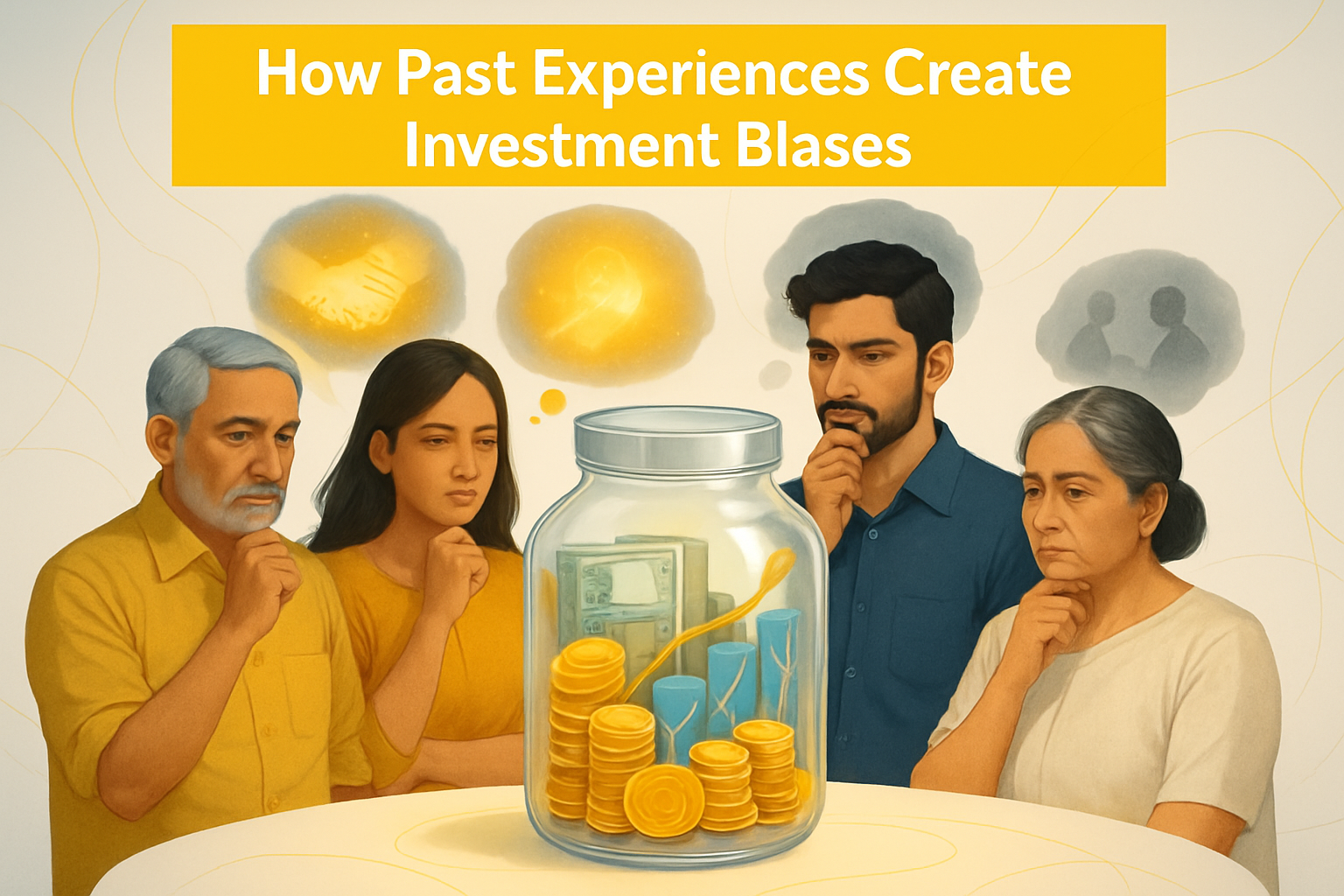
Personal life experience and its impact on money making shapes every investment decision we make, often in ways we don’t even realize. Our financial past creates mental shortcuts that influence how we approach future opportunities, sometimes helping but often hindering our wealth-building journey.
Past Losses Breed Caution, Leading to Conservative Portfolios
When investors experience significant losses, their brains form powerful associations between risk and pain. This protective mechanism often pushes people toward overly conservative investments like fixed deposits, even when inflation erodes their purchasing power over time.
Consider someone who lost money during market volatility – they might avoid equity mutual funds entirely, missing out on long-term growth potential. While 67% of urban Indians save over 20% of their income, many park these savings in low-yield instruments due to past negative experiences rather than strategic planning.
This fear-driven approach can trap investors in the middle-income cycle, where their money grows too slowly to beat inflation or build meaningful wealth.
Early Successes Can Cause Overconfidence and Risky Decisions
Success can be just as dangerous as failure when it comes to personal life experience and its impact on money making. Early wins often create a false sense of investment genius, leading to increasingly risky bets without proper risk management.
New investors who experience quick gains might abandon diversification principles or ignore warning signs. They may concentrate their portfolio in a few high-performing stocks or chase trending investments based purely on recent success patterns.
The result? What started as smart investing turns into speculation, often wiping out gains when markets inevitably correct.
Financial Trauma May Drive Fear-Based Investing and Missed Opportunities
Family financial crises, job losses, or business failures create deep psychological scars that influence investment behavior for years. These traumatic experiences often result in excessive cash hoarding or complete market avoidance.
Despite 82% of Indians planning to boost their savings in 2025, many struggle with analysis paralysis – they want to invest but can’t overcome their fear of potential losses. Personal life experience and its impact on money making becomes a barrier rather than a guide.
Understanding these psychological patterns helps investors recognize when emotions override logic, creating space for more balanced financial decisions.
Pattern Recognition in Financial Decision-Making

Personal life experience and its impact on money making becomes particularly evident when investors rely on familiar patterns to guide their investment choices. For small-time traders and investors across India’s top 30 and beyond 30 cities, these behavioral patterns often create invisible barriers to building wealth. The tendency to recognize patterns from past experiences, while useful in many areas of life, can lead to costly mistakes in financial markets.
Relying on Past Market Events May Distort Current Investment Timing
Many investors fall into the trap of using historical market events as their primary guide for current decisions. Personal life experience and its impact on money making shows up when someone who witnessed the 2008 financial crisis might avoid equity investments entirely, missing out on significant growth opportunities. This backward-looking approach ignores that market conditions, economic policies, and global factors constantly change.
The problem intensifies when investors expect exact repetitions of past patterns. Someone who made quick profits during a particular sector boom might keep waiting for similar conditions, leading to poor timing decisions. Current market dynamics require fresh analysis rather than reliance on outdated patterns.
Sector Preferences from Personal Exposure Limit Diversification
Professional background heavily influences investment choices, often to the investor’s detriment. An IT professional might overweight technology stocks, while a pharmaceutical worker gravitates toward healthcare investments. This familiarity bias, rooted in personal life experience and its impact on money making, creates concentrated portfolios that increase risk.
With 67% of urban Indians aiming to increase investments in 2025, understanding sector diversification becomes critical. Personal exposure breeds overconfidence in specific industries, leading investors to ignore other profitable sectors.
Geographic and Cultural Biases Lead to Favoritism Toward Familiar Investment Types
Regional preferences significantly shape investment decisions. Investors from certain states might favor gold and real estate over mutual funds, while others prefer traditional fixed deposits over market-linked instruments. These cultural biases, reflecting personal life experience and its impact on money making, often limit exposure to better-performing asset classes.
Popular instruments like mutual funds at 78% and equities at 60% show growing acceptance, but geographic biases still influence allocation decisions. Understanding these patterns helps investors make more objective choices for long-term wealth creation.
Breaking Free from Limiting Financial Beliefs
 Personal life experience and its impact on money making often creates invisible barriers that keep investors stuck in unproductive patterns. When 67% of urban Indians save over 20% of their income but still struggle to achieve financial goals due to poor planning, it’s clear that past experiences shape present decisions more than logic does.
Recognize When Past Experiences Drive Current Decisions
Your childhood memories of financial stress can unconsciously guide today’s investment choices. Maybe you watched parents lose money in the stock market, or saw relatives struggle with debt. These experiences create mental shortcuts that feel protective but often limit growth.
Common experience-based biases include:
- Avoiding all risk after witnessing family losses
- Choosing only familiar investment options
- Making decisions based on recent market events rather than long-term data
The key is awareness. Notice when you’re saying “no” to opportunities because they remind you of past failures. Personal life experience and its impact on money making becomes less destructive when you can identify these patterns.
Implement Structured Investment Plans to Reduce Emotional Bias
Structure removes emotion from the equation. When markets drop or surge, having predetermined rules helps you stick to rational decisions instead of reacting from fear or greed.
Systematic approaches work because they:
- Remove daily decision-making stress
- Prevent impulsive choices during market volatility
- Create consistent habits regardless of current emotions
Start with simple automated investments. Set fixed amounts to transfer monthly into diversified funds. This removes the need to “feel ready” or wait for perfect timing.
Use Goal-Based Strategies to Align Actions with Objectives
Clear goals transform abstract investing into concrete planning. Instead of vague wishes like “build wealth,” define specific targets: “₹50 lakhs for retirement by age 55” or “₹15 lakhs emergency fund within three years.”
Goal-based investing shifts focus from:
- Past regrets to future possibilities
- Market timing to systematic progress
- Emotional reactions to measured steps
When personal life experience and its impact on money making threatens to derail progress, return to your written goals. This anchors decisions in logic rather than limiting beliefs from yesterday’s experiences.
Building Objective Investment Strategies Despite Personal Biases
 Personal life experience and its impact on money making runs deep in India’s investment landscape. With 67% of urban Indians saving over 20% of their income yet struggling to achieve financial goals, the disconnect between saving behavior and successful outcomes often stems from emotional decision-making rooted in past experiences.
Automate Investments to Remove Emotional Decision-Making
Setting up systematic investment plans eliminates the human tendency to time markets based on fear or greed. When your grandfather lost money in the 1992 stock market crash, that story becomes your investment compass—usually pointing away from equity markets even when data suggests otherwise.
Automation breaks this cycle. Monthly SIPs in mutual funds remove the daily emotional weight of investment decisions. Your portfolio grows while you focus on work and family, free from the anxiety that personal life experience and its impact on money making typically creates.
The numbers support this approach: automated investors consistently outperform those making manual investment decisions by avoiding panic selling during market downturns.
Use Data-Driven Analysis Rather Than Instincts Rooted in Past Experiences
Replace family financial folklore with concrete market research and performance metrics. That uncle who “always avoided mutual funds” might have missed 78% of urban investors’ preferred wealth-building vehicle.
Study fund performance over 5-10 year periods instead of relying on anecdotal warnings. Compare expense ratios, track records, and manager consistency. When personal life experience and its impact on money making conflicts with data, choose evidence over emotion.
Create simple decision trees: if the fund has delivered consistent returns above inflation for five consecutive years, personal reservations take a backseat to proven performance.
Apply Clear Risk Management Protocols to Avoid Repeating Personal Financial History
Establish predetermined rules for portfolio allocation, stop-losses, and rebalancing schedules. Write down these protocols when your mind is calm, not during market turbulence when family financial disasters echo loudest.
Diversify across asset classes regardless of which investment “burned” your family before. Set maximum exposure limits—never put more than 10% in any single stock, regardless of how confident you feel.
When personal life experience and its impact on money making whispers “this feels too risky,” refer back to your written risk management plan. Successful investing requires structure that overrides both optimistic and pessimistic biases inherited from past financial experiences.
This systematic approach creates wealth through consistency rather than emotional reactions to market movements.
Goal-Oriented Financial Planning
 Personal life experience and its impact on money making often stems from unclear financial objectives. Many Indian investors jump into markets without defining what success looks like. This approach typically leads to emotional decisions during market volatility, especially when dealing with the reality that 67% of urban Indians save over 20% but still fail to achieve financial goals due to poor planning[3].
Set Specific Milestones to Anchor Investment Decisions
Clear financial targets transform investing from guesswork into purposeful action. Instead of vague goals like “building wealth,” successful investors define precise milestones: accumulating ₹5 lakhs for a home down payment within three years or creating a ₹50 lakh retirement corpus by age 55.
Personal life experience and its impact on money making becomes evident when investors without specific targets often abandon strategies during market downturns. Those with defined milestones stay committed because they understand exactly what they’re working toward.
Align Investments with Timeline for Each Goal
Different goals require different investment approaches. Emergency funds need immediate access through savings accounts or liquid funds. Home purchases planned for the next five years suit balanced mutual fund portfolios. Retirement planning spanning decades can handle equity-heavy allocations for maximum growth potential.
With 78% of urban Indians preferring mutual funds[3], understanding which fund categories match your timeline becomes crucial. Personal life experience and its impact on money making shows that mismatched timelines create unnecessary stress and suboptimal returns.
Regularly Review and Update Strategies as Life Circumstances Evolve
Financial plans aren’t permanent blueprints. Career changes, family additions, or unexpected opportunities require strategy adjustments. Annual reviews help identify whether current investments still align with evolving priorities and timelines.
Given that personal life experience and its impact on money making continuously shapes our risk capacity and financial needs, rigid planning often fails. Successful investors adapt their strategies while maintaining focus on core objectives, ensuring their money works effectively across changing life phases.
Learning from Experiences Without Being Controlled by Them

Your personal life experience and its impact on money making often creates a delicate balance between wisdom and paralysis. Many investors carry financial scars that either drive them toward excessive caution or reckless abandon, missing the sweet spot of informed decision-making.
Turn Past Losses into Learning Without Becoming Overly Risk-Averse
Financial setbacks teach valuable lessons, but they shouldn’t become permanent roadblocks to wealth building. When you’ve lost money in the stock market or fallen victim to poor investment choices, the natural response is avoiding similar risks entirely.
However, complete risk avoidance often means missing opportunities for growth. The key lies in understanding what went wrong rather than avoiding the entire asset class. If mutual fund investments didn’t work previously due to lack of research, the lesson isn’t to avoid mutual funds—it’s to improve your selection process.
Smart investors extract specific lessons from failures while maintaining their capacity for calculated risks. This approach prevents past experiences from limiting future potential.
Balance Caution from Experience with Openness to New Opportunities
Experience-driven caution serves as valuable protection, but rigid adherence to past patterns can limit growth potential. Your personal life experience and its impact on money making shouldn’t create inflexible rules that prevent adaptation to new market conditions.
Consider how 67% of urban Indians plan to increase investments in 2025, showing that successful investors balance learned caution with forward-thinking optimism. They use past experiences as guidelines, not absolute rules.
The most effective approach involves setting clear boundaries based on lessons learned while remaining open to evolving strategies. This balance helps you avoid repeating mistakes without becoming overly conservative.
Build Confidence Methodically While Respecting Your Comfort Levels
Rebuilding investment confidence requires systematic progress that honors your experience-shaped comfort zones. Rather than jumping back into high-risk investments immediately, successful recovery involves gradual exposure to manageable risks.
Start with amounts you can afford to lose completely, focusing on understanding rather than immediate profits. As your knowledge and comfort grow, you can gradually increase your investment levels and risk tolerance.
This methodical approach respects your history while building sustainable confidence for future financial decisions.
Conclusion
Personal experiences shape your current approach to money and investing, but they don’t have to dictate your financial future. By understanding the origins of your money habits and applying systematic, goal-driven investment strategies, you can build wealth that honors your past without being limited by it.
Ready to transform your money mindset? Let Potoos help you build objective, systematic investment strategies and unlock your financial potential. Talk to our experts now, Whatsapp us at +919841741234