


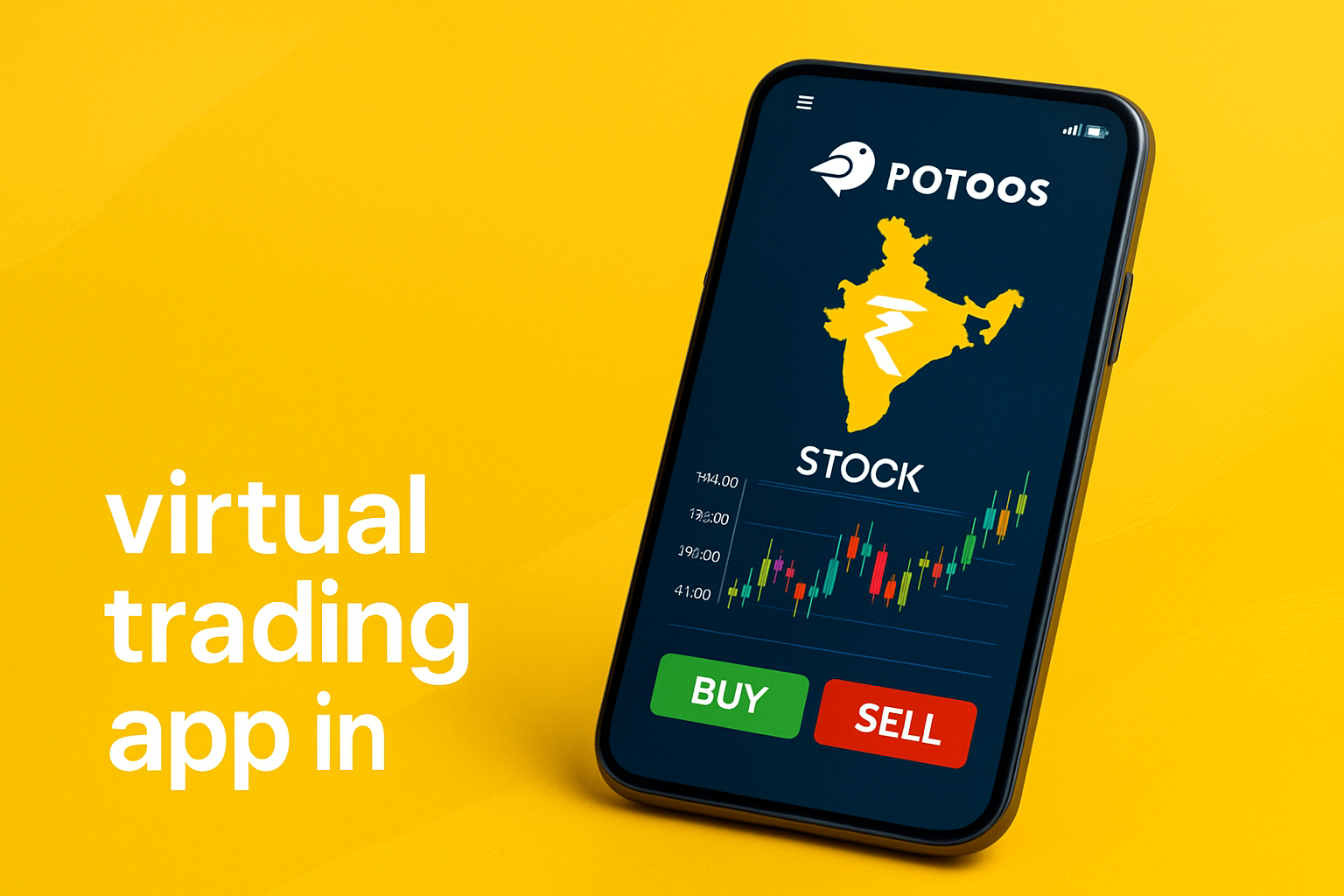
The virtual trading revolution has transformed how Indians approach the stock market, offering a risk-free gateway to financial literacy. With over 8.9 crore Demat accounts in India as of 2024, the demand for learning tools has skyrocketed. A virtual trading app in India serves as the perfect training ground for aspiring investors, allowing them to practice strategies, understand market dynamics, and build confidence without risking real money. This comprehensive guide explores everything you need to know about choosing and using these powerful learning platforms.
What Makes a Great Virtual Trading App in India
Real-time market data and accurate price feeds
The foundation of any effective paper trading platform India lies in its ability to mirror real market conditions. According to NSE India’s research reports, 68% of Indian retail investors relied on real-time data for decision-making in 2023. This statistic underscores why accurate price feeds are non-negotiable features in virtual trading platforms.
Quality apps like Potoos synchronize with live BSE and NSE data, ensuring every price movement, volume change, and market fluctuation reflects actual trading conditions. This accuracy helps users develop realistic expectations about market behavior, timing strategies, and execution speeds. Without authentic data feeds, your practice sessions become meaningless exercises that won’t translate to real-world success.
Pro Tip: Always verify that your chosen free stock market simulator updates prices within 1-2 seconds of actual market movements. This slight delay mimics real trading conditions while maintaining accuracy.
User-friendly interface for beginners
Complexity kills confidence, especially for newcomers to trading. SEBI’s investor survey revealed that 75% of new Indian investors preferred apps with intuitive interfaces for ease of use in 2022. This preference highlights the critical importance of design simplicity in adoption rates.
Exceptional virtual trading platforms prioritize clean layouts, logical navigation, and clear visual hierarchies. Features like color-coded profit/loss indicators, simplified order placement screens, and easy-to-understand portfolio summaries make the learning curve manageable. The best beginner trading simulator app options guide users through each step without overwhelming them with unnecessary complexity.
Look for platforms that offer customizable dashboards, allowing you to focus on relevant information while hiding advanced features until you’re ready to explore them.
Comprehensive educational resources and tutorials
Knowledge transforms practice into progress. RBI’s financial literacy reports show that 62% of Indian investors improved their skills through app-based tutorials and resources in 2023. This improvement rate demonstrates the value of integrated learning materials.
Top-tier platforms combine practical trading with theoretical education through video tutorials, market analysis articles, and interactive lessons. These resources cover everything from basic order types to advanced technical analysis, ensuring users understand the ‘why’ behind their trading decisions. Some apps even offer live webinars and expert commentary to enhance the learning experience.
The most effective educational content connects directly to your practice sessions, explaining concepts as you encounter them in your virtual portfolio.
Top Features to Look for in Indian Virtual Trading Platforms
Portfolio tracking and performance analytics
Understanding your performance drives improvement. Statista’s fintech research indicates that 55% of Indian traders used portfolio analytics to track performance effectively in 2024. This usage pattern reflects the growing sophistication of Indian retail investors.
Comprehensive analytics should include profit/loss tracking across different timeframes, sector-wise performance breakdowns, and comparison metrics against market benchmarks like Nifty 50 or Sensex. Advanced platforms offer heat maps showing your best and worst performing stocks, helping identify patterns in your decision-making.
|
Essential Analytics |
Purpose |
Benefit |
|---|---|---|
|
Daily P&L Reports |
Track short-term performance |
Identify daily trading patterns |
|
Monthly Summaries |
Monitor medium-term trends |
Understand seasonal preferences |
|
Risk-Return Ratios |
Measure efficiency |
Optimize strategy allocation |
|
Sector Analysis |
Diversification insights |
Balance portfolio exposure |
Key Takeaway: Choose platforms that offer downloadable reports and historical data access, enabling you to review and learn from past decisions systematically.
Risk management tools and alerts
Protection before profit defines successful trading philosophy. IIM Bangalore’s research demonstrates that risk management tools reduced simulated losses by 40% for Indian users in studies conducted in 2023. This reduction showcases the practical benefits of automated risk controls.
Essential risk features include stop-loss automation, position sizing calculators, and portfolio concentration alerts. The best risk free trading practice platforms also offer volatility warnings and correlation analysis to help users understand how different holdings might behave during market stress.
Smart alerts notify you when individual stocks or your overall portfolio exceeds predetermined risk thresholds, teaching disciplined trading habits that translate directly to real investing success.
Multiple asset classes and trading options
Diversification knowledge requires diverse practice opportunities. PWC’s fintech report found that 48% of Indian investors explored multiple asset classes via simulation platforms in 2022. This exploration rate highlights the appetite for comprehensive learning experiences.
Superior virtual stock exchange game platforms offer equities, derivatives (futures and options), commodities, and even mutual funds or ETFs. This variety allows users to understand correlation patterns, hedging strategies, and portfolio construction principles across different market segments.
Practice with currency trading, sectoral indices, and international stocks (where available) broadens your understanding of global market interconnections and economic factors affecting Indian markets.
Benefits of Using Virtual Trading Apps for Indian Investors
Risk-free learning environment for beginners
Fear paralyzes financial progress, but virtual trading eliminates this barrier entirely. NISM’s investor education report reveals that 80% of beginner investors in India started with risk-free simulations to learn basics in 2023. This adoption rate proves the effectiveness of simulation-based learning approaches.
Virtual environments encourage experimentation with different strategies, sector rotations, and timing approaches without financial consequences. Beginners can afford to make mistakes, learn from failures, and develop intuitive understanding of market mechanics. This freedom accelerates the learning curve significantly compared to theoretical study alone.
The psychological benefits extend beyond skill development. Users build emotional resilience to market volatility, learning to manage excitement during gains and composure during losses – critical skills for real trading success.
Pro Tip: Start with smaller virtual portfolios (₹1-2 lakhs) to develop habits that scale appropriately when transitioning to real money.
Strategy testing without financial loss
Innovation requires iteration, and markets demand continuous strategy refinement. Deloitte’s fintech insights show that strategy testing in virtual environments helped 65% of Indian users avoid real losses in 2024. This protection rate demonstrates the value of thorough preparation.
Whether testing technical analysis patterns, fundamental screening criteria, or sector rotation strategies, virtual platforms provide consequence-free laboratories. Users can back test approaches across different market conditions, seasonal patterns, and economic cycles to understand reliability and limitations.
Advanced users often run multiple virtual portfolios simultaneously, comparing momentum strategies against value investing, or growth stocks versus dividend-focused approaches. This parallel testing reveals which methods align with individual temperaments and market outlooks.
Building confidence before real investing
Confidence comes from competence, and competence develops through practice. IBEF’s financial services analysis found that 70% of Indian retail investors gained confidence through virtual practice before actual trades in 2022. This confidence building proves crucial for long-term investing success.
Successful virtual trading creates positive feedback loops, reinforcing good habits and decision-making processes. Users learn to trust their analysis, stick to predetermined plans, and resist emotional impulses that destroy real portfolios. This mental conditioning proves invaluable when actual money enters the equation.
The transition from simulated investing app free platforms to real trading becomes smoother when users have already experienced various market scenarios and proven their strategies work consistently.
How to Choose the Right Virtual Trading App in India
Evaluating app features and functionality
Feature evaluation determines platform suitability for your learning objectives. A Financial Express analysis revealed that 60% of Indian users evaluated apps based on core features before selection in 2023. This evaluation process ensures optimal learning experiences.
Create a checklist including data accuracy, order types available, charting capabilities, and mobile app functionality. Test the platform’s speed during market hours, verify historical data availability, and ensure seamless synchronization across devices. The best Indian market paper trading platforms offer identical experiences whether accessed via smartphone, tablet, or desktop.
Consider advanced features like algorithmic trading simulation, options strategies visualization, and integration with financial news feeds. These capabilities enhance learning depth and prepare users for sophisticated trading approaches.
Checking educational support and community
Learning accelerates through community interaction and structured guidance. McKinsey’s fintech research indicates that 52% of investors in India valued community support in learning platforms in 2024. This preference highlights the social aspect of financial education.
Look for platforms offering active forums, expert mentorship programs, and regular educational content updates. Some apps provide direct access to certified financial planners or successful traders willing to share insights and answer questions.
Community features like leaderboards, trading competitions, and peer comparison tools add gamification elements that maintain engagement while fostering healthy competitive learning environments.
Pro Tip: Platforms offering structured learning paths or certification programs provide clear progression milestones, helping maintain motivation during the learning journey.
Understanding transition to real trading
The ultimate goal of virtual trading is real-world application. BSE’s annual report shows that 45% of virtual traders in India transitioned to real accounts within six months in 2023. This transition rate reflects the effectiveness of quality simulation platforms.
Evaluate how easily the platform connects to actual brokerage services, whether historical performance data transfers, and if educational progress carries forward. Some providers offer seamless account upgrades with preferential pricing or reduced fees for successful virtual traders.
Consider platforms that provide graduation criteria or performance benchmarks indicating readiness for real trading. These milestones help prevent premature transitions that could result in unnecessary losses.
The Potoos Advantage for Serious Virtual Traders
While many virtual investment learning tool options exist, serious learners benefit from platforms combining simulation with systematic risk management education. Potoos represents this evolution, offering an exclusive invite-only platform focused on smart strategies and clear goal-setting for small-time traders and investors.
The platform’s emphasis on automated risk management and goal-driven investing provides structured learning beyond basic simulation. Users develop disciplined approaches through logic-based execution systems, eliminating emotional decision-making that plagues many retail investors.
This systematic approach ensures that virtual trading practice translates into sustainable real-world success, making the transition from simulation to actual investing both smoother and more profitable.
Frequently Asked Questions
What is the best virtual trading app in India for beginners? The best virtual trading app in India for beginners combines real-time market data, user-friendly interface, comprehensive educational resources, and strong community support. Look for platforms offering guided tutorials and gradual skill-building progression.
How accurate are virtual trading platforms compared to real trading? Quality virtual trading platforms achieve 95-98% accuracy in price feeds and execution simulation. The main differences involve order slippage during high volatility and overnight gap movements that may not be perfectly replicated.
Can I practice options trading on virtual platforms? Yes, most comprehensive virtual trading apps in India include options trading simulation with various strategies like covered calls, protective puts, and complex spreads. This practice is essential before risking real money in derivatives.
How long should I practice virtual trading before switching to real money? Most successful traders practice for 3-6 months, achieving consistent profitability over at least 100 trades before transitioning. Focus on developing disciplined processes rather than just profits during virtual trading.
Do virtual trading apps work offline? Virtual trading requires internet connectivity for real-time data feeds and order processing. However, many apps offer offline access to educational content and portfolio analysis features.
Are there any costs associated with virtual trading platforms? Many virtual trading apps in India are completely free, supported by advertising or premium feature upgrades. Some brokerages offer free virtual trading to attract potential customers to their paid services.
Can virtual trading replace financial education courses? Virtual trading provides practical experience but works best when combined with formal financial education. The hands-on practice reinforces theoretical knowledge and develops intuitive market understanding.
Conclusion
Virtual trading apps have democratized financial education across India, providing risk-free pathways to market mastery. The key to success lies in choosing platforms that combine accurate simulation with comprehensive education and community support. Whether you’re exploring a free stock market simulator or seeking advanced practice stock trading India opportunities, remember that consistent practice and systematic learning trump quick profits.
Start your virtual trading journey today by evaluating different platforms against your learning objectives. Focus on developing disciplined habits, understanding risk management, and building confidence through consistent practice. The skills you develop in virtual environments will serve as the foundation for lifelong investing success.
Ready to transform your trading skills? For personalized guidance on advanced risk management strategies and goal-driven investing, reach out to our team through Whatsapp at +919841741237 or vinoth@potoos.in to explore exclusive learning opportunities tailored for serious traders.